Blog
The Sense of Touch: Haptic Technology and Its Role in the Metaverse, Training, and Daily Gadgets**

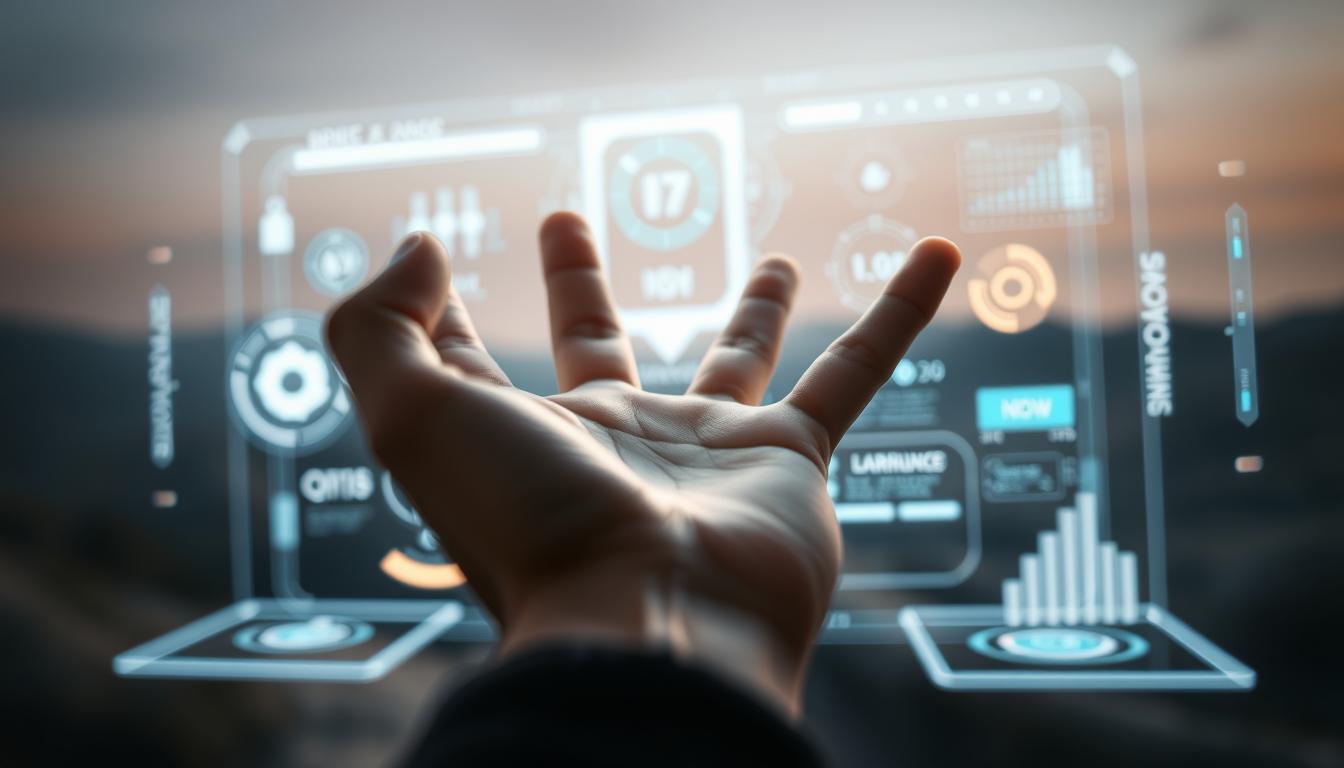
The sense of touch is a fundamental aspect of our interaction with the world around us. With the advancement of technology, haptic feedback systems have emerged, enabling a more immersive experience in digital environments.
Haptic technology is revolutionizing the way we engage with virtual reality, enhancing training simulations, and transforming daily gadgets into more interactive devices.
As we delve into the metaverse and other digital landscapes, the importance of haptic tech becomes increasingly evident. It bridges the gap between the physical and digital worlds, offering a more engaging and realistic experience.
Key Takeaways
- Haptic technology is crucial for creating immersive experiences in the metaverse.
- It enhances training simulations by providing realistic feedback.
- Daily gadgets are becoming more interactive with haptic feedback.
- The technology is advancing to include more sophisticated feedback systems.
- Haptic tech has the potential to revolutionize various industries.
Understanding the Science of Touch
The sense of touch is fundamental to our interaction with the world. It allows us to perceive texture, temperature, and vibrations, which are crucial for our daily experiences and interactions. “Touch is not just a single sense, but a complex sensory modality that encompasses various types of receptors and neural pathways,” as noted by experts in the field.
How Our Bodies Process Tactile Sensations
Our skin contains a variety of mechanoreceptors, thermoreceptors, and nociceptors that detect different types of stimuli. When these receptors are activated, they send signals through the nervous system to the brain, where they are interpreted as specific sensations. For instance, mechanoreceptors are responsible for detecting pressure and vibrations, while thermoreceptors sense temperature changes.
The Neurological Basis of Touch Perception
The neurological basis of touch perception involves complex processing in the brain. The somatosensory cortex plays a key role in interpreting tactile information, allowing us to discern the shape, size, and texture of objects. Advances in understanding this process are crucial for developing technologies that can simulate touch, such as those used in sensory feedback in robotics, enabling machines to “feel” and interact with their environment more effectively.
This understanding is also pivotal for creating immersive experiences in the digital world, enhancing our ability to feel tactile sensations in virtual environments, which is often referred to as “feeling the digital world.”
The Evolution of Haptic Tech: From Rumble Packs to Neural Interfaces
Haptic technology has come a long way since its inception, evolving from simple rumble packs to sophisticated neural interfaces. This significant progression has transformed how we interact with digital devices, enhancing our sensory experiences.
Early Haptic Devices and Their Limitations
The first haptic devices were basic vibration motors used in gaming controllers, known as rumble packs. These early systems provided a simple form of feedback but were limited in their capabilities. They could only offer a rudimentary sense of touch, lacking the nuance required for more complex interactions.
Limitations of early haptic devices included their inability to provide detailed tactile feedback. Users could feel vibrations, but these were not sophisticated enough to simulate real-world sensations accurately.
Breakthrough Moments in Haptic Technology Development
Several breakthroughs have driven the advancement of haptic technology. One significant development was the introduction of more sophisticated actuators that could provide a wider range of tactile sensations. Another was the integration of haptic feedback into various devices, from smartphones to VR systems.
Advancements in haptic tech have enabled more immersive experiences. For instance, the development of neural interfaces represents a significant leap forward, allowing for direct communication between the human brain and digital devices.
How Haptic Feedback Systems Create the Illusion of Touch
Haptic feedback systems are revolutionizing the way we interact with digital devices. By simulating the sense of touch, these systems enable more immersive and engaging experiences in various fields, from gaming to professional training simulations.
The technology behind haptic feedback involves several key components. Understanding these elements is crucial to grasping how haptic systems create the illusion of touch.
Mechanical Actuators and Their Functioning
Mechanical actuators are a fundamental part of many haptic feedback systems. They work by using motors or other mechanisms to move or vibrate parts of a device, creating tactile sensations. For instance, smartphones use vibration motors to simulate the feeling of pressing a button or navigating through menus.
Force Feedback Technologies
Force feedback technologies take haptic feedback a step further by providing resistance or forces that users can feel. This is commonly seen in gaming controllers and simulation devices, where the system responds to user inputs by generating forces that mimic real-world experiences, such as the resistance felt when steering a vehicle or the recoil of a gun.
Thermal and Electrical Stimulation Methods
Some haptic systems use thermal or electrical stimulation to create tactile sensations. Thermal stimulation can simulate the feeling of temperature changes, while electrical stimulation can directly activate nerve endings, creating a sensation of touch without physical movement. These methods are still in development but offer promising avenues for more sophisticated haptic feedback.
By combining these technologies, haptic feedback systems can create a wide range of tactile sensations, from simple vibrations to complex, nuanced interactions that simulate real-world touch. This capability is crucial for applications like immersive VR touch and sensory feedback in robotics, where the goal is to create experiences that feel as natural and realistic as possible.
Haptic Tech in the Metaverse: Bridging Physical and Virtual Realities
As we dive deeper into the metaverse, haptic technology is bridging the gap between physical and virtual realities. This integration is revolutionizing the way we interact with virtual environments, making experiences more immersive and engaging.
Current Implementations in Social VR Platforms
Social VR platforms are at the forefront of incorporating haptic technology to enhance user interactions. These platforms are leveraging haptic feedback to create more realistic and engaging virtual experiences.
Meta’s Haptic Gloves and Similar Technologies
Meta has been developing haptic gloves that allow users to feel tactile sensations in virtual environments. These gloves use advanced actuators to simulate the sense of touch, enabling users to interact with virtual objects in a more natural way. Similar technologies are being developed by other companies, pushing the boundaries of what’s possible in the metaverse.
Haptic Feedback in Virtual Social Interactions
Haptic feedback is being used to enhance virtual social interactions, allowing users to feel tactile sensations when interacting with others in the metaverse. This can include feeling a virtual handshake or receiving tactile feedback when interacting with virtual objects together.
Creating Meaningful Touch Interactions Between Avatars
The ability to create meaningful touch interactions between avatars is a crucial aspect of making the metaverse feel more realistic and engaging. Developers are working on sophisticated algorithms and haptic feedback systems to enable nuanced interactions between users.
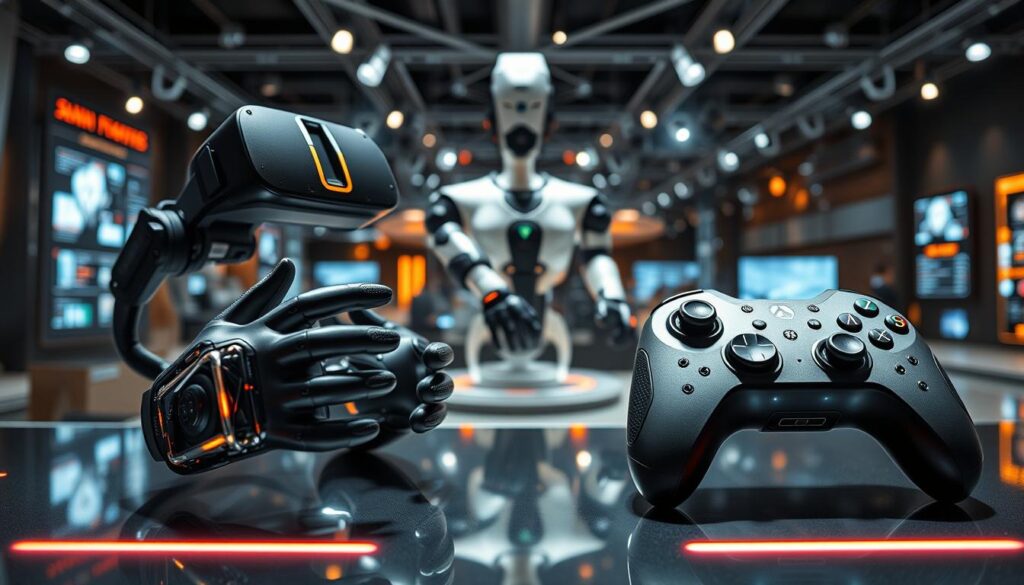
By enabling more natural and intuitive interactions, haptic technology is set to play a pivotal role in the development of the metaverse, making it a more immersive and engaging experience for users.
Immersive VR Touch: Beyond Visual and Audio Experiences
Immersive VR touch is taking the virtual reality experience to new heights by incorporating tactile sensations. This advancement is crucial in creating a truly immersive experience, going beyond just visual and audio elements.
Full-Body Haptic Suits and Their Capabilities
Full-body haptic suits are revolutionizing VR by providing users with a comprehensive tactile experience. These suits are equipped with various actuators that simulate touch sensations across the body.
bHaptics TactSuit and Similar Products
The bHaptics TactSuit is a notable example of a full-body haptic suit. It offers advanced haptic feedback, enhancing the VR experience with precise tactile sensations. Other products in this category include:
- Hardlight VR Suit
- Teslasuit
Integration with Popular VR Platforms
These haptic suits are designed to integrate seamlessly with popular VR platforms, including:
- Oculus
- Vive
This compatibility ensures that users can enjoy an enhanced VR experience across various platforms.
Localized Haptic Feedback for Enhanced Immersion
Localized haptic feedback is another significant advancement in VR technology. By providing precise tactile sensations, it further enhances the sense of immersion. For instance, in a VR gaming scenario, localized haptic feedback can simulate the sensation of holding a gun or feeling the impact of a collision.
Haptic Technology in Professional Training Simulations
Haptic technology is revolutionizing professional training simulations by providing realistic tactile feedback. This advancement is significantly enhancing the training experience across various fields, including medicine, industry, and the military.
Medical Training Applications
Haptic technology is being increasingly used in medical training to simulate real-world procedures. This allows trainees to practice and hone their skills in a controlled environment.
Surgical Simulation Systems
Surgical simulation systems utilize haptic feedback to mimic the sensations of real surgery, allowing surgeons to practice complex procedures.
Patient Examination Training
Haptic technology is also used to train medical professionals in patient examination techniques, providing a realistic feel for different conditions.
Industrial and Military Simulation Systems
In addition to medical applications, haptic technology is used in industrial and military training simulations. These systems help trainees develop the necessary skills for complex tasks and high-pressure situations.
Skill Development Through Tactile Feedback
The use of haptic feedback in training simulations enables trainees to develop muscle memory and improve their skills through realistic tactile experiences. This enhances their performance and readiness for real-world scenarios.
The Future of Controllers: Haptic Innovations in Gaming and Beyond
The future of gaming is not just about visuals; it’s also about how we interact with virtual worlds through touch. As technology advances, haptic feedback is becoming a crucial element in gaming controllers, enhancing the overall gaming experience.
Next-Generation Gaming Controllers
Next-generation gaming controllers are incorporating advanced haptic technologies to provide more immersive experiences. These innovations are setting new standards for gaming interactions.
PlayStation DualSense Adaptive Triggers
The PlayStation DualSense controller features Adaptive Triggers, which offer variable resistance, allowing for new gameplay mechanics. This technology enables developers to create more engaging and interactive experiences.
Nintendo’s HD Rumble Technology
Nintendo’s HD Rumble technology provides precise and nuanced vibration, enhancing gameplay with subtle feedback. This feature has been particularly praised in games that require delicate control.
Adaptive Triggers and Dynamic Feedback Systems
Adaptive triggers and dynamic feedback systems are revolutionizing the way we interact with games. These technologies allow for a more immersive experience, with controllers responding dynamically to in-game actions. For instance, , the use of adaptive triggers can simulate the resistance felt when drawing a bowstring or the subtle vibrations of a character’s footsteps.
As haptic technology continues to evolve, we can expect even more sophisticated feedback systems in future gaming controllers, further blurring the line between the virtual and real worlds.
Sensory Feedback in Robotics: Teaching Machines to Feel
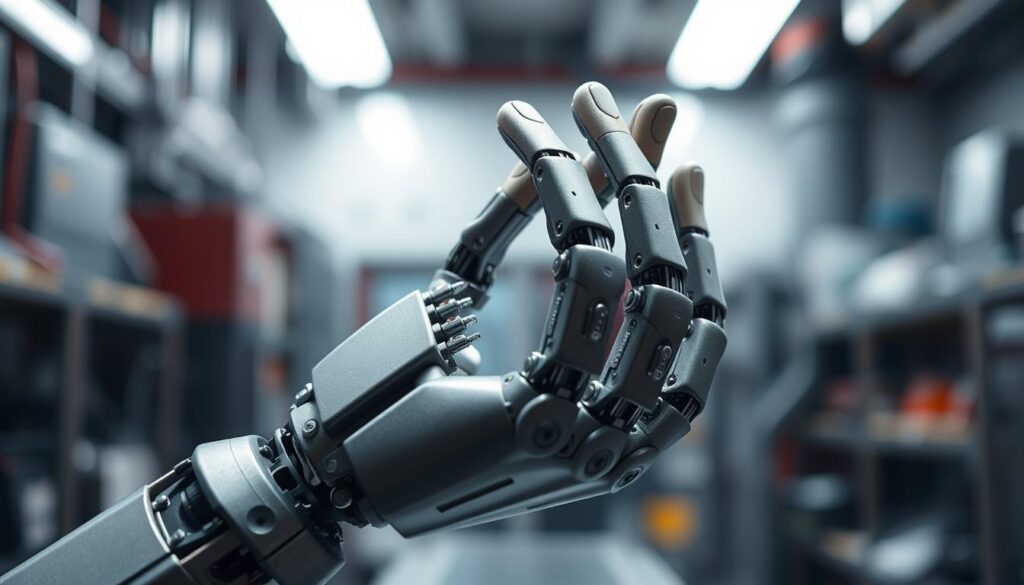
The integration of sensory feedback in robotics is revolutionizing how machines interact with their environment. By enabling robots to “feel,” we can significantly enhance their ability to perform delicate and complex tasks.
Robotic Touch Sensors and Their Applications
Robotic touch sensors are crucial for allowing machines to perceive their surroundings. These sensors can be applied in various industries, including manufacturing and healthcare, where precision and delicacy are required. For instance, robotic arms equipped with touch sensors can handle fragile objects without causing damage.
Haptic Teleoperation Systems
Haptic teleoperation systems enable operators to control robots remotely while receiving tactile feedback. This technology is particularly useful in situations where direct human intervention is risky or impossible.
Remote Surgery Applications
Remote surgery is a significant application of haptic teleoperation. Surgeons can perform operations from a distance, feeling the resistance and texture of tissues, which enhances precision and control.
Hazardous Environment Operations
Haptic teleoperation is also vital for operations in hazardous environments, such as nuclear plants or areas contaminated with toxic substances. Operators can control robots to perform tasks while receiving real-time sensory feedback, minimizing the risk to human life.
| Application | Description | Benefits |
|---|---|---|
| Remote Surgery | Surgeons operate from a distance with tactile feedback | Enhanced precision, reduced risk |
| Hazardous Environment Operations | Robots perform tasks in dangerous conditions with real-time feedback | Minimized risk to human life, efficient task execution |
Everyday Applications: Haptic Technology in Consumer Gadgets
Haptic technology is no longer limited to gaming controllers; it’s now a key feature in many consumer gadgets. The integration of haptic feedback systems is enhancing the user experience across various devices, making interactions more intuitive and engaging.
Smartphones and Wearable Devices
Smartphones and wearable devices have been at the forefront of adopting haptic technology. These devices use haptic feedback to provide a more immersive experience for users.
Apple’s Taptic Engine
Apple’s Taptic Engine is a prime example of haptic technology in smartphones. It provides subtle vibrations and feedback to enhance the user experience, making interactions feel more tactile and responsive. For instance, when using an iPhone, the Taptic Engine provides feedback when typing on the keyboard or navigating through menus.
Haptic Feedback in Smartwatches
Smartwatches also utilize haptic feedback to notify users of important events without disturbing others. A gentle tap on the wrist can signal an incoming call or message, making it a discreet yet effective way to stay informed. Companies like Apple and Samsung have incorporated advanced haptic feedback systems in their smartwatches, enhancing the overall user experience.
Haptic Interfaces in Automotive and Home Appliances
The application of haptic technology extends beyond personal devices to automotive and home appliances. In vehicles, haptic feedback is used in infotainment systems and steering wheels to provide a more intuitive driving experience. For example, some cars use haptic feedback on the steering wheel to alert drivers of lane departures or other safety issues. For more information on haptic-enabled product design, you can visit DigiKey’s article on haptic technology.
In home appliances, haptic interfaces are being used to make interactions more user-friendly. For instance, some modern washing machines and ovens use haptic feedback to guide users through different settings and options. This technology is making it easier for people to navigate complex appliance controls, enhancing overall usability.
The future of controllers and devices is being shaped by haptic feedback technology, and its applications continue to grow across various industries. As haptic technology advances, we can expect to see even more innovative uses in consumer gadgets, further enhancing our daily interactions with technology.
Accessibility and Inclusivity Through Haptic Tech
The integration of haptic feedback is enhancing digital inclusivity for individuals with disabilities. By providing a sense of touch, haptic technology is making digital interactions more engaging and accessible. This technology has the potential to revolutionize the way people with disabilities interact with digital content, enabling them to “feel the digital world” in ways previously unimaginable.
Assistive Technologies for the Visually Impaired
Haptic technology is being increasingly used to assist visually impaired individuals. For instance, haptic feedback can be used in navigation systems, allowing users to receive tactile directions. According to a study published on PMC, such technologies significantly improve navigation accuracy for the visually impaired. Moreover, haptic interfaces can enable visually impaired users to “feel” graphical user interfaces, enhancing their ability to interact with digital devices.
Haptic Communication Systems for Various Disabilities
Beyond visual impairments, haptic technology is also being adapted for other disabilities. For example, individuals with hearing impairments can benefit from haptic alert systems that provide tactile notifications. Additionally, haptic feedback is being explored in sensory feedback in robotics to aid individuals with motor disabilities, allowing for more precise control over prosthetic devices. These advancements are not only enhancing the quality of life for individuals with disabilities but are also opening up new possibilities for their interaction with the digital world.
Challenges and Limitations in Current Haptic Systems
As haptic technology continues to evolve, it is crucial to identify and overcome the current limitations. Haptic feedback systems, a crucial component of immersive VR touch, face several challenges that impact their effectiveness.
Technical Hurdles to Overcome
One of the primary technical challenges is the development of high-resolution haptic feedback that can simulate a wide range of textures and sensations. Current systems often rely on mechanical actuators, which can be bulky and limited in their capabilities.
| Technical Challenge | Description | Potential Solution |
|---|---|---|
| Limited Resolution | Current haptic systems lack the resolution to simulate complex textures. | Advanced actuator technology |
| Bulky Actuators | Mechanical actuators can be large and cumbersome. | Miniaturization of actuators |
| Limited Feedback Range | Haptic systems often cannot provide a wide range of feedback. | Development of new feedback mechanisms |
User Adaptation and Acceptance Issues
User adaptation is another significant challenge. Some users may experience cyber sickness or discomfort when using haptic devices, particularly in immersive VR environments. To address this, developers must focus on creating systems that are intuitive and comfortable for a wide range of users.
Conclusion: The Tactile Revolution in Digital Experiences
The sense of touch is revolutionizing the way we interact with the digital world. Haptic Tech is at the forefront of this revolution, enabling us to feel the digital world in ways previously unimaginable. From the Metaverse to everyday gadgets, haptic technology is creating more immersive and interactive experiences.
The future of controllers is being shaped by haptic innovations, allowing for more nuanced and engaging interactions. As haptic tech continues to evolve, we can expect to see even more sophisticated applications in gaming, training simulations, and beyond.
By bridging the gap between physical and virtual realities, haptic technology is poised to transform the way we experience the digital world. As we move forward, it’s clear that the tactile revolution will have a lasting impact on the way we interact with technology, making it more intuitive, immersive, and engaging.