
Blog
The Rental and Resale Revolution: New Business Models Driving Eco-Conscious Fashion Consumption**

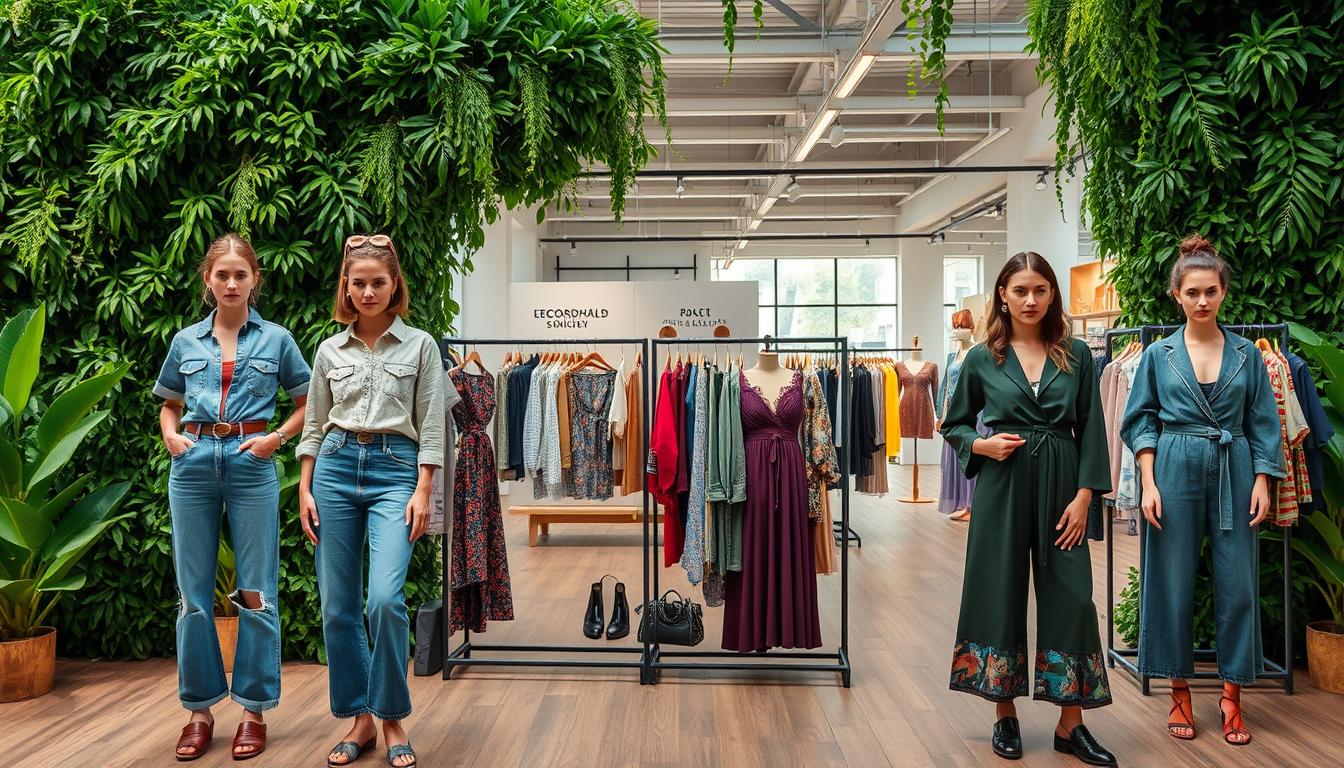
The fashion industry is undergoing a significant transformation, driven by growing awareness of environmental issues and the need for more eco-conscious consumption practices.
As consumers become more mindful of their purchasing decisions, new business models are emerging to cater to this shift. The rental and resale market is gaining traction, offering consumers the opportunity to enjoy high-quality, stylish clothing without the long-term commitment.
This revolution is not only changing the way people consume fashion but also promoting a more sustainable approach to style. By adopting rental and resale options, consumers can reduce their environmental footprint and support a more circular economy.
Key Takeaways
- The rental and resale market is driving eco-conscious fashion consumption.
- New business models are emerging to cater to the growing demand for sustainable fashion trends.
- Consumers are becoming more mindful of their purchasing decisions and opting for more environmentally friendly options.
- The rental and resale revolution is promoting a more circular economy in the fashion industry.
- Eco-conscious fashion is gaining traction as consumers prioritize sustainability.
The Environmental Cost of Traditional Fashion
The environmental cost of the fashion industry’s rapid growth is alarming. The traditional fashion industry, driven by fast fashion, has become a significant contributor to global ecological problems.
Fast Fashion’s Growing Ecological Footprint
Fast fashion’s business model, based on quick turnover and low prices, has resulted in a substantial ecological footprint. The production and distribution of vast amounts of clothing contribute to environmental degradation.
Resource Consumption in the Clothing Industry
The clothing industry is a resource-intensive sector, with significant impacts on water and energy resources.
Water Usage and Pollution
The textile industry is one of the largest consumers of water worldwide. For example, it takes around 1,800 gallons of water to produce just one pair of jeans. Moreover, the dyeing and treatment processes result in water pollution, affecting ecosystems and human health.
Carbon Emissions and Textile Waste
The fashion industry is also a significant contributor to carbon emissions, with the production, transportation, and packaging of clothing generating substantial greenhouse gases. Furthermore, the rise of fast fashion has led to an increase in textile waste, with millions of tons of clothing ending up in landfills each year.
As consumers become more aware of these issues, clothing rental services are emerging as a more sustainable alternative, reducing the need for frequent purchases and the resultant waste.
| Environmental Impact | Fast Fashion | Sustainable Alternatives |
|---|---|---|
| Water Usage | High consumption (e.g., 1,800 gallons per pair of jeans) | Reduced consumption through efficient production methods |
| Carbon Emissions | Significant emissions from production and transportation | Lower emissions through local production and sustainable materials |
| Textile Waste | Millions of tons of waste annually | Reduced waste through recycling and rental services |
“The fashion industry is at a crossroads. We can either continue down the path of environmental degradation or adopt more sustainable practices. The choice is ours.”
Sustainable Fashion: A Growing Movement
The fashion industry is witnessing a significant shift towards sustainability, driven by changing consumer behaviors and technological innovations. This movement is not just about reducing environmental impact; it’s also about creating a more equitable and economically viable industry.
Evolving Consumer Values in America
American consumers are increasingly prioritizing sustainability when making purchasing decisions. This shift is driven by growing awareness of the environmental and social impacts of fast fashion. Consumers are now seeking out brands that align with their values, including transparency, ethical production, and environmental stewardship.
- Increased demand for eco-friendly products
- Growing interest in circular fashion practices
- Rise of conscious consumerism
The Business Case for Eco-Conscious Fashion
Adopting sustainable practices is not just good for the planet; it’s also beneficial for businesses. Companies that embrace eco-conscious fashion can enhance their brand reputation and foster consumer loyalty.
Brand Reputation and Consumer Loyalty
By prioritizing sustainability, brands can differentiate themselves in a crowded market and build trust with their customers. This can lead to increased customer loyalty and retention. For instance, brands that participate in clothing recycling programs or use sustainable materials are viewed more favorably by consumers.
Long-term Economic Benefits
Sustainable fashion practices can also lead to long-term economic benefits. By reducing waste and improving supply chain efficiency, companies can save costs and improve their bottom line.
Moreover, as the luxury resale market continues to grow, brands that invest in sustainable practices are likely to see increased demand for their products, both new and pre-owned.
Circular Economy: Reimagining Fashion’s Future
The traditional linear model of fashion is being challenged by the circular economy, which promises a more sustainable future. This economic model is designed to reduce waste and the continuous consumption of resources by promoting the reuse and recycling of products.
Breaking the Make-Use-Dispose Cycle
The fashion industry’s traditional model follows a straightforward path: produce, consume, and discard. However, this linear economy is no longer viable due to its significant environmental impact. A circular economy seeks to break this cycle by encouraging the continuous use of products through recycling, upcycling, and product take-back programs.
Value Creation Through Extended Product Life
By focusing on the durability and longevity of products, businesses can create more value for consumers. This approach not only reduces waste but also encourages consumers to invest in higher-quality products. Extended product life is achieved through design for recyclability, reusability, and the use of sustainable materials.
Designing for Durability and Recyclability
Design plays a crucial role in the circular economy. Clothing must be designed with its entire lifecycle in mind, from production to end-of-life. This involves using materials that are durable, recyclable, and non-toxic. By doing so, brands can reduce waste and create products that remain in use for longer, thereby reducing the need for new raw materials.
Clothing Rental Services: Wardrobe Access Without Ownership
The concept of wardrobe access without ownership is gaining traction through clothing rental services. This innovative approach to fashion consumption allows individuals to enjoy a wide variety of clothing without the long-term commitment of purchasing.
Operational Insights into American Rental Platforms
American clothing rental platforms operate by offering a curated selection of garments for rent, often with styling services to match customer preferences. These platforms typically maintain a robust inventory, ensuring a wide range of sizes and styles are available.
Key features of these platforms include:
- Flexible rental periods
- High-quality, well-maintained garments
- Convenient shipping and return policies
From Special Occasions to Everyday Wear
Initially, clothing rental services focused on special occasions such as weddings and formal events. However, there’s been a significant shift towards catering to everyday wear as well, with many platforms now offering casual, workwear, and even children’s clothing.
This expansion reflects changing consumer attitudes towards ownership and sustainability.
Environmental Impact Reduction Through Shared Use
One of the most significant benefits of clothing rental services is the reduction in environmental impact. By sharing garments among multiple users, the need for new, resource-intensive clothing production is decreased.
The environmental benefits include:
- Reduced waste
- Lower carbon footprint
- Conservation of resources
As consumers continue to embrace sustainable fashion practices, clothing rental services are poised to play a crucial role in the future of fashion consumption.
Inside the Booming Luxury Resale Market
As sustainability becomes a priority for consumers, the luxury resale market is booming, with digital marketplaces leading the charge. This shift is transforming how people shop for luxury goods, making high-end fashion more accessible and sustainable.
Digital Marketplaces Transforming Second-Hand Shopping
Digital platforms have revolutionized the way people buy and sell luxury items. Online marketplaces like The RealReal and Vestiaire Collective have made it easier for consumers to purchase pre-owned luxury goods, providing a wide range of authenticated products. These platforms offer a seamless shopping experience, complete with detailed product descriptions and high-quality images.
Authentication Processes and Trust Building
One of the critical challenges in the luxury resale market is ensuring the authenticity of products. Reputable digital marketplaces have implemented rigorous authentication processes to verify the legitimacy of luxury items. This not only protects buyers from counterfeit products but also builds trust within the market, encouraging more consumers to participate.
Investment Potential of Pre-Owned Designer Items
Pre-owned designer items are not only a sustainable choice but also a potentially lucrative investment. Certain luxury goods, such as limited-edition handbags and watches, tend to appreciate in value over time. The growing demand for these items has made the luxury resale market an attractive option for investors. Key factors to consider include:
- The brand’s reputation and historical resale value
- The condition and rarity of the item
- Market trends and demand
By understanding these factors, consumers can make informed decisions about their luxury purchases, whether for personal enjoyment or as an investment.
Peer-to-Peer Fashion Exchanges: Community-Powered Sustainability
Peer-to-peer fashion exchanges are creating a new paradigm in sustainable fashion consumption across the United States. This innovative approach to fashion not only reduces waste but also fosters a sense of community among participants.
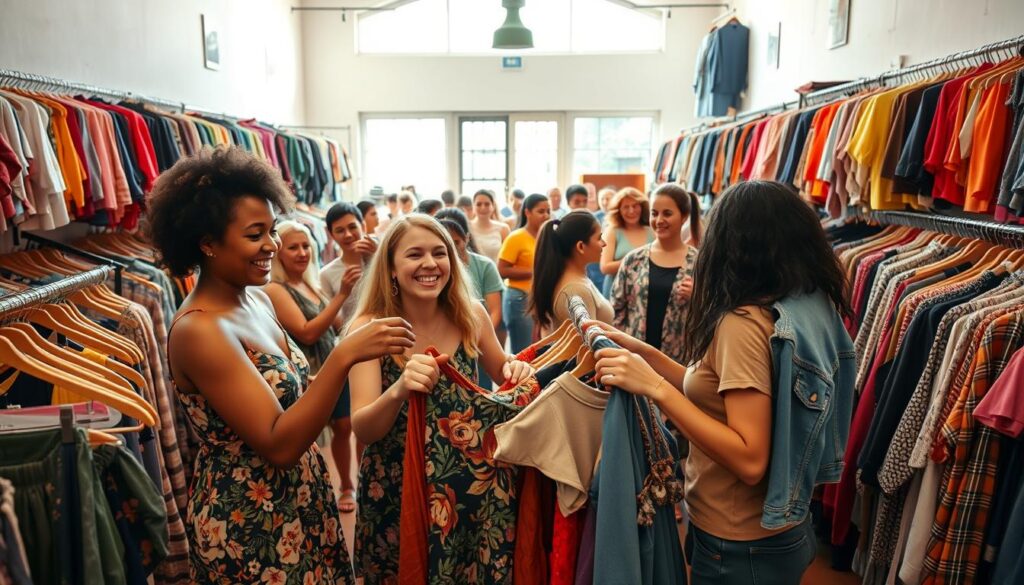
Social Platforms Connecting Closets Across America
Social platforms are playing a crucial role in connecting individuals across America who are interested in exchanging clothing. These platforms provide a space for users to share, swap, and purchase second-hand clothing, reducing the demand for new, resource-intensive garments.
Key features of these platforms include:
- User profiles and closet showcases
- Messaging systems for negotiation and arrangement
- Rating systems to build trust within the community
Technology Enabling Seamless Transactions
Technology is the backbone of these peer-to-peer exchanges, enabling seamless transactions and a smooth user experience. Advanced algorithms match users with items they’re interested in, while secure payment processing and shipping integrations simplify the exchange process.
User Experience and Safety Features
To ensure a positive experience for all users, these platforms prioritize user safety and satisfaction. This includes implementing robust verification processes, providing clear guidelines for transactions, and offering customer support.
The emphasis on user experience not only encourages repeat business but also fosters a loyal community around the platform.
Fashion Subscription Models: Curated Style on Demand
Fashion subscription services are revolutionizing the way consumers interact with clothing, providing curated experiences tailored to individual tastes. These models offer a personalized approach to fashion, leveraging data and styling services to meet the unique needs of each subscriber.
Personalization Through Data and Styling Services
By utilizing consumer data and preferences, fashion subscription models can offer highly personalized recommendations. Styling services further enhance this experience, providing expert advice to ensure that subscribers receive clothing that fits their style and needs.
Flexibility and Variety for the Modern Consumer
One of the key benefits of fashion subscription models is the flexibility they offer. Consumers can enjoy a wide range of clothing options without the long-term commitment of ownership. This variety is particularly appealing to modern consumers who value experiences over possessions.
Reducing Impulse Purchases and Closet Waste
By providing curated selections, fashion subscription models can help reduce impulse purchases and minimize closet waste. This not only benefits consumers financially but also contributes to a more sustainable fashion industry.
| Benefits | Description | Impact |
|---|---|---|
| Personalization | Tailored recommendations based on consumer data | Increased customer satisfaction |
| Flexibility | Access to a variety of clothing without ownership | Reduced closet waste |
| Sustainability | Minimized impulse purchases and waste | More eco-friendly fashion consumption |
Circular Fashion Technology: Powering the Revolution
Circular fashion technology is revolutionizing the way we produce, consume, and dispose of clothing, promoting a more sustainable future. This technological shift is crucial in reducing the environmental footprint of the fashion industry, which is among the largest polluters globally.
Blockchain for Transparent Supply Chains
One of the key technologies driving this revolution is blockchain. By providing a decentralized and immutable ledger, blockchain technology enhances transparency and accountability throughout the supply chain. This allows stakeholders to track the origin, production, and distribution of garments, ensuring ethical practices and reducing counterfeiting.
For instance, companies like Provenance are using blockchain to verify the authenticity of products and ensure that materials are sourced sustainably. This not only builds trust among consumers but also encourages brands to adopt more responsible practices.
AI-Driven Solutions for Inventory Management
AI-driven solutions are transforming inventory management by predicting demand, optimizing stock levels, and minimizing waste. Advanced algorithms can analyze consumer behavior, seasonal trends, and sales data to help brands make informed decisions about production and inventory.
| AI Application | Benefits | Impact on Sustainability |
|---|---|---|
| Demand Forecasting | Reduces overproduction | Minimizes waste |
| Inventory Optimization | Improves stock levels | Reduces excess inventory |
| Personalized Recommendations | Enhances customer experience | Encourages sustainable consumption |
Digital Product Passports and Lifecycle Tracking
Digital product passports are another innovative solution that enables the tracking of a product’s lifecycle. By providing detailed information about a garment’s materials, production process, and environmental impact, these passports empower consumers to make more informed purchasing decisions.
As consumers become more environmentally conscious, the demand for transparency and sustainability in the fashion industry will continue to grow. By leveraging technologies like blockchain, AI, and digital product passports, the industry can move towards a more circular and sustainable model.
Material Innovation: The Foundation of Sustainable Business Models
Material innovation is at the forefront of the fashion industry’s move towards a more sustainable future. As consumers increasingly demand eco-friendly products, businesses are responding with groundbreaking materials and production methods that minimize environmental impact.
Next-Generation Recyclable Fabrics
The development of recyclable fabrics is revolutionizing the fashion industry. Companies are now creating fabrics that can be fully recycled, reducing waste and the continuous demand for new raw materials. For instance, Evrnu’s NuCycl technology transforms cotton waste into a new, high-quality fabric, demonstrating the potential for closed-loop production systems.
Upcycled and Regenerated Textiles in Commercial Use
Upcycling and regenerating textiles are gaining traction in commercial fashion. Brands are incorporating upcycled materials into their product lines, giving old materials a new life. Patagonia’s Re\collection program, for example, encourages customers to recycle their worn-out Patagonia items, which are then repurposed into new products.

Durability Enhancements for Multiple Wearers
Enhancing the durability of clothing is crucial for reducing the frequency of purchases and, consequently, waste. Innovations in fabric treatment and manufacturing processes are making clothes more resistant to wear and tear. This not only extends the life of the garment but also supports the business models of clothing rental services.
| Innovation | Description | Impact |
|---|---|---|
| Recyclable Fabrics | Fabrics designed to be fully recyclable | Reduces waste and demand for new raw materials |
| Upcycled Textiles | Old materials repurposed into new products | Gives old materials a new life, reducing landfill waste |
| Durability Enhancements | Clothing made more resistant to wear and tear | Extends garment life, supporting rental services |
By embracing material innovation, the fashion industry can significantly reduce its environmental footprint while meeting consumer demands for sustainable products. As technology continues to evolve, we can expect to see even more groundbreaking developments in this area.
Sustainable Fashion Trends for 2026: What’s Next
Sustainable fashion is on the cusp of a revolution, driven by changing consumer behaviors and technological advancements. As we look towards 2026, several key trends are emerging that promise to reshape the industry.
Projected Growth in American Rental and Resale Markets
The rental and resale markets in the United States are expected to experience significant growth, driven by increasing consumer demand for affordable and sustainable fashion options. According to industry forecasts, the sustainable fashion market is set to expand, with rental services becoming increasingly popular for both special occasions and everyday wear.
Key factors contributing to this growth include:
- Increasing awareness of environmental issues associated with fast fashion
- Advancements in technology that facilitate peer-to-peer transactions and rental services
- Shifting consumer preferences towards more sustainable and flexible fashion options
Emerging Business Models on the Horizon
As the industry continues to evolve, new business models are emerging that cater to the growing demand for sustainable fashion. These include:
- Subscription-based services that offer personalized styling and flexible rental options
- Peer-to-peer platforms that enable consumers to rent or buy second-hand clothing directly from other individuals
- Digital marketplaces that specialize in pre-owned luxury items, providing authentication and trust-building measures
These emerging models not only offer consumers more choices but also contribute to reducing waste and promoting a more circular economy in the fashion industry.
Integration of Virtual Fashion with Physical Ownership
Another significant trend on the horizon is the integration of virtual fashion with physical ownership. Virtual fashion items, which can be worn in digital environments such as social media, gaming, and virtual reality, are becoming increasingly popular. This trend is expected to continue into 2026, with more brands exploring the potential of virtual clothing as a complement to physical products.
“The rise of virtual fashion is not just about creating new revenue streams; it’s also about reducing the environmental impact of physical production and distribution.”
By embracing virtual fashion, consumers can enjoy the benefits of fashion without the associated environmental costs, marking a significant step towards a more sustainable future for the industry.
Conclusion: Embracing Fashion’s Circular Future
The fashion industry is on the cusp of a revolution, driven by the adoption of sustainable practices and the emergence of new business models. As consumers increasingly prioritize eco-conscious fashion consumption, the traditional make-use-dispose cycle is being replaced by a circular economy that promotes the reuse and recycling of clothing.
By embracing rental services, resale markets, and subscription models, consumers can significantly reduce their environmental footprint while staying stylish. The integration of technology, such as blockchain and AI, is further enhancing the sustainability of these business models by improving supply chain transparency and inventory management.
As the industry continues to evolve, it is clear that embracing a circular future is not only beneficial for the environment but also presents a compelling business opportunity. By supporting sustainable fashion practices and participating in the rental and resale revolution, consumers can play a crucial role in shaping a more sustainable future for the fashion industry.