Blog
The Bioprinting Revolution: 3D-Printed Organs, Tissues, and the Future of Personalized Medicine**

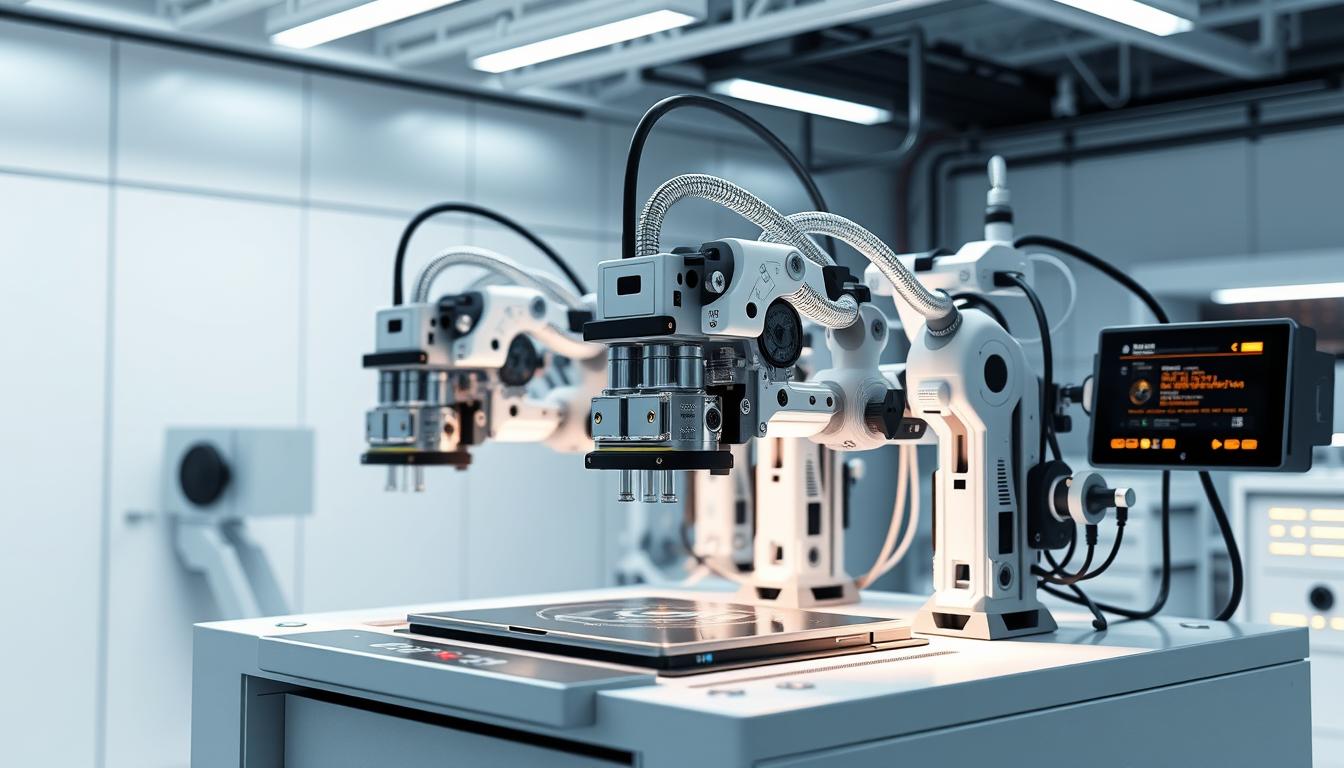
The medical field is on the cusp of a revolution, thanks to the advent of 3D bioprinting technology. This innovative technique involves creating complex biological structures, such as organs and tissues, using living cells and biomaterials.
Bioprinting has the potential to transform the way we approach healthcare, enabling the creation of personalized organs and tissues for transplantation, drug testing, and disease modeling.
The possibilities are vast, and the impact could be profound, changing the face of medicine as we know it.
Key Takeaways
- The bioprinting revolution is transforming the medical field with 3D-printed organs and tissues.
- 3D bioprinting technology enables the creation of complex biological structures.
- Personalized medicine is becoming a reality through bioprinting.
- Bioprinting has vast potential for transplantation, drug testing, and disease modeling.
- The impact of bioprinting on healthcare could be profound.
The Dawn of a Medical Revolution
The medical field is on the cusp of a revolution, driven by advancements in bioprinting technology. This innovative approach is transforming the way we think about organ transplants and tissue repair.
The Urgent Need for Tissue and Organ Alternatives
The shortage of organs available for transplantation is a critical issue in healthcare. Bioprinting offers a potential solution by creating functional tissue and organ alternatives. This technology could significantly reduce the waiting time for patients in need of transplants.
How Bioprinting is Changing the Medical Landscape
Bioprinting is revolutionizing regenerative medicine by enabling the creation of customized tissues and organs. This not only addresses the issue of organ scarcity but also opens up new possibilities for personalized medicine. With bioprinting, the potential for patient-specific treatments is becoming a reality.
The integration of bioprinting in medical practice is expected to improve patient outcomes and reduce healthcare costs in the long run. As this technology continues to evolve, it is likely to have a profound impact on the future of medicine.
The Evolution of Bioprinting Technology
The journey of bioprinting technology has been marked by numerous breakthroughs and innovations. As a field that combines engineering, biology, and medicine, bioprinting has evolved significantly over the years.
From Traditional Printing to Biological Construction
Bioprinting has its roots in traditional 3D printing technology. However, the shift from printing inert materials to living cells and biological constructs has been a significant challenge. Researchers have had to develop new techniques and materials, such as bio-inks, that can support the complex requirements of living tissues.
Key Milestones in Bioprinting Development
Early Experiments and Prototypes
The early days of bioprinting were characterized by experiments with different cell types and bio-ink formulations. These initial prototypes laid the groundwork for more sophisticated bioprinting techniques.
Breakthrough Moments in the Field
Several breakthroughs have propelled bioprinting forward. These include the development of vascularized tissues, which has been a significant challenge, and advancements in bio-ink development that have improved cell viability and tissue functionality.
The evolution of 3D bioprinting technology has opened new avenues for medical research and treatment. As the field continues to advance, we can expect to see more sophisticated applications of bioprinting in medicine.
Understanding the Science Behind Bioprinting
Understanding bioprinting requires a look into its fundamental principles and technologies. Bioprinting, a subset of regenerative medicine, involves the use of 3D printing technology to create biological structures.
The Fundamental Principles of 3D Bioprinting
The process of 3D bioprinting is based on the principle of layer-by-layer deposition of biological materials, known as bio-inks, to form complex three-dimensional structures. This technique allows for the precise control over the placement of cells and biomaterials, enabling the creation of functional tissue substitutes.
Types of Bioprinting Technologies
Several bioprinting technologies have been developed, each with its unique advantages and applications.
Inkjet-Based Bioprinting
Inkjet-based bioprinting uses droplets of bio-ink to create the desired pattern. This method is highly precise and allows for the deposition of multiple cell types.
Extrusion-Based Bioprinting
Extrusion-based bioprinting involves the continuous extrusion of bio-ink through a nozzle to create structures. This technique is widely used due to its ability to handle high-viscosity bio-inks.
Laser-assisted bioprinting uses a laser to propel cells onto a substrate, allowing for high-resolution printing. This method is particularly useful for creating complex cellular patterns.
Stereolithography-Based Bioprinting
Stereolithography-based bioprinting employs a laser to solidify bio-ink layer by layer, resulting in highly accurate and detailed structures. This technique is beneficial for creating intricate tissue models.
These bioprinting technologies are advancing the field of regenerative medicine by providing innovative solutions for tissue engineering and organ fabrication.
Bio-Inks: The Building Blocks of Printed Tissues
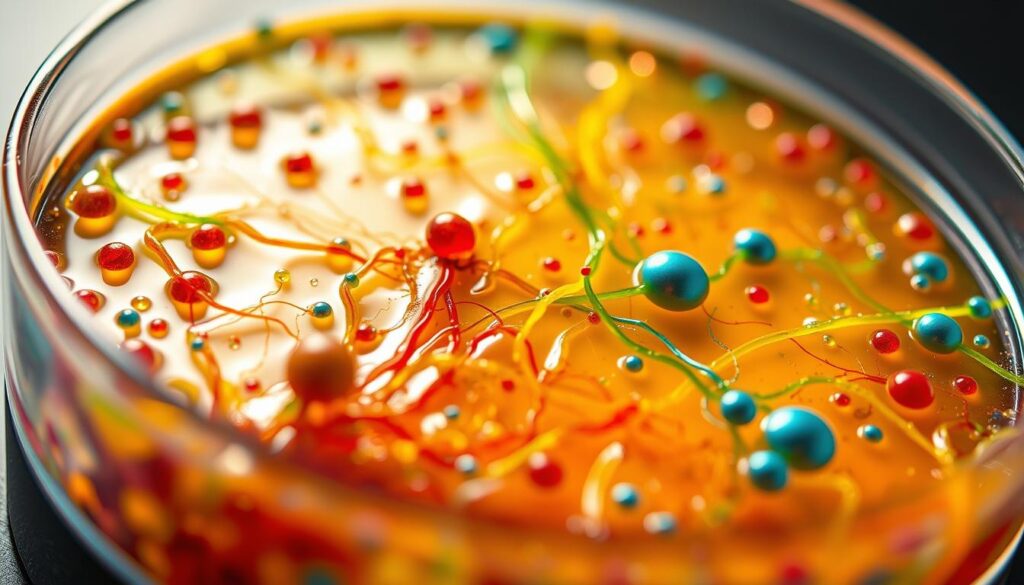
Bio-inks are the fundamental materials used in bioprinting, playing a vital role in the production of printed tissues and organs. These complex formulations are designed to support the structural integrity and biological function of the printed tissues.
Composition and Properties of Bio-Inks
The composition of bio-inks typically involves a combination of cells, biomaterials, and growth factors. The properties of these components, such as viscosity, mechanical strength, and biocompatibility, are crucial in determining the success of the bioprinting process.
Recent Advances in Bio-Ink Development
Recent years have seen significant advancements in bio-ink development, driven by the need for more sophisticated tissue engineering solutions. Researchers are exploring new bio-materials and formulations that can better support the complex requirements of bioprinting.
Natural vs. Synthetic Bio-Materials
The choice between natural and synthetic bio-materials is a critical consideration in bio-ink formulation. Natural materials, such as collagen and alginate, offer biocompatibility and biodegradability, while synthetic materials provide mechanical strength and tunable properties.
Challenges in Bio-Ink Formulation
Despite the progress made, challenges remain in bio-ink formulation, including achieving the optimal balance between printability, cell viability, and mechanical properties. Addressing these challenges is crucial for advancing the field of 3D bioprinting technology.
Current Applications of Bioprinting in Medicine
Bioprinting’s impact on medicine is multifaceted and far-reaching. This technology is not only revolutionizing the way we approach medical treatments but also opening new avenues for research and development.
Tissue Models for Drug Testing are one of the significant applications of bioprinting. By creating accurate tissue models, researchers can test drug efficacy and toxicity more effectively, reducing the need for animal testing and accelerating the drug development process.
Tissue Models for Drug Testing
Bioprinted tissue models mimic the human body’s complex structures, allowing for more accurate drug testing. This can lead to better drug safety profiles and more effective treatments.
Skin Grafts and Wound Healing
Bioprinting is also being used to create skin grafts for wound healing. These grafts can be customized to match the patient’s skin type, promoting faster healing and reducing scarring.
Orthopedic Applications
In orthopedics, bioprinting is making significant strides. From cartilage and bone tissue engineering to joint replacement innovations, bioprinting is transforming the field.
Cartilage and Bone Tissue Engineering
Bioprinting enables the creation of customized cartilage and bone tissues, which can be used to repair damaged joints or replace damaged bone structures.
Joint Replacement Innovations
The technology is also being used to create personalized joint replacements, improving the fit and function of these implants, and potentially leading to better patient outcomes.
These applications demonstrate the potential of bioprinting to address the organ scarcity solution and advance regenerative medicine. As the technology continues to evolve, we can expect to see even more innovative applications in the medical field.
The Promise of 3D-Printed Organs
The advent of 3D bioprinting technology is revolutionizing the field of organ transplantation. This innovative approach to creating functional organs is not only a significant scientific breakthrough but also a beacon of hope for thousands of patients awaiting transplants.
Current State of Organ Printing
Organ printing is a complex process that involves the precise layering of bio-inks to create functional tissue structures. Recent advancements in 3D bioprinting technology have enabled researchers to create complex tissue models that mimic the human body’s intricate structures.
Challenges in Creating Functional Organs
Despite the progress, creating fully functional organs remains a significant challenge. One of the primary obstacles is achieving adequate vascularization, as noted in a study published on the National Center for Biotechnology Information website. Ensuring that printed organs can integrate with the recipient’s body and perform their intended functions is crucial.
Success Stories and Breakthroughs
There have been several notable breakthroughs in the field of bioprinting. For instance, the development of mini-organs or organoids has opened new avenues for research and potential therapeutic applications.
Mini-Organs and Organoids
Mini-organs are miniature, simplified versions of organs that can be used for drug testing and disease modeling. These tiny structures have the potential to revolutionize the way we approach medical research and treatment.
Progress Toward Fully Functional Organs
While we are not yet at the stage of having fully functional, transplantable organs, the progress being made is promising. As
“The future of bioprinting holds much promise for creating organs that can be used for transplantation, potentially saving countless lives.”
Continued research and advancements in 3D bioprinting technology are bringing us closer to this goal.
Bioprinting as a Solution to Organ Scarcity
Bioprinting technology is emerging as a potential solution to the worldwide organ scarcity problem. The shortage of organs for transplantation has been a longstanding issue, resulting in lengthy waiting lists and significant mortality rates among patients awaiting transplants.
The Global Organ Shortage Crisis
The global organ shortage crisis is a pressing concern, with thousands of patients on waiting lists for organ transplants. This shortage not only affects the lives of those waiting but also places a significant burden on healthcare systems worldwide.
How Bioprinted Organs Could Transform Transplantation
Bioprinted organs have the potential to revolutionize the field of organ transplantation. By creating organs that are tailored to individual patients’ needs, bioprinting could significantly improve transplant success rates.
Reducing Transplant Waiting Lists
One of the most significant benefits of bioprinted organs is the potential to reduce transplant waiting lists. By providing a reliable source of organs, bioprinting could help alleviate the shortage and ensure that patients receive the transplants they need in a timely manner.
Eliminating Organ Rejection Issues
Bioprinted organs, being created from a patient’s own cells, could eliminate the issue of organ rejection. This personalized approach to organ transplantation could lead to improved patient outcomes and reduced reliance on immunosuppressive medications.
Key advantages of bioprinted organs include:
- Personalized organs tailored to individual patients
- Reduced risk of organ rejection
- Potential to decrease transplant waiting lists
As bioprinting technology continues to evolve, it holds promise for addressing the global organ shortage crisis and transforming the field of organ transplantation.
Personalized Medicine Through Bioprinting
Bioprinting technology is paving the way for customized medical treatments that cater to individual patient needs. This innovative approach is transforming the healthcare landscape by providing patient-specific solutions.
Patient-Specific Tissue Engineering
One of the significant advantages of bioprinting is its ability to create patient-specific tissue models. These models are engineered using the patient’s own cells, allowing for more accurate disease modeling and treatment planning.
Creating Patient-Derived Tissue Models
Patient-derived tissue models are revolutionizing the field of medicine by enabling researchers to study diseases in a more personalized context. This approach helps in understanding disease progression and identifying effective treatment strategies.
Customized Drug Testing and Development
Bioprinting also enables customized drug testing through the creation of tissue models that mimic the patient’s condition. This personalized approach to drug testing can significantly improve treatment outcomes.
Precision Medicine Applications
Precision medicine is greatly enhanced through bioprinting. By creating tissues that are specific to a patient’s genetic makeup, healthcare providers can tailor treatments to the individual, leading to more effective care.
| Application | Benefit |
|---|---|
| Patient-Specific Tissue Models | Accurate disease modeling |
| Customized Drug Testing | Improved treatment outcomes |
The Role of Bioprinting in Regenerative Medicine
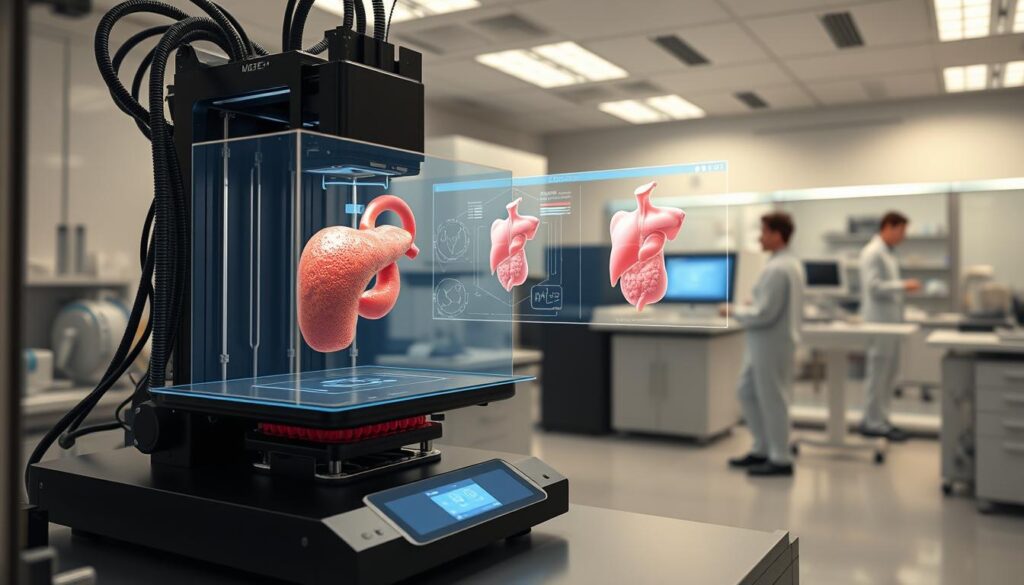
Regenerative medicine is witnessing a significant transformation with the advent of bioprinting, enabling the creation of complex biological structures. This innovative technology is not only enhancing cell therapy but also revolutionizing tissue regeneration applications.
Cell Therapy Enhancement
Bioprinting is playing a crucial role in enhancing cell therapy by providing a platform for the precise deposition of cells and biomaterials. This precision is critical for developing effective therapeutic strategies. Recent studies have shown that bioprinted cell constructs can significantly improve tissue repair mechanisms.
Tissue Regeneration Applications
Tissue regeneration is another area where bioprinting is making a substantial impact. By creating complex tissue structures, bioprinting is opening new possibilities for the repair and replacement of damaged tissues.
Stem Cell Integration in Bioprinted Constructs
The integration of stem cells into bioprinted constructs is a promising approach for enhancing tissue regeneration. Stem cells have the ability to differentiate into various cell types, making them ideal for regenerative therapies.
In-Situ Bioprinting Possibilities
In-situ bioprinting, which involves printing tissues directly into the patient’s body, is an emerging area of research. This technique has the potential to revolutionize the field by enabling real-time tissue repair during surgical procedures.
As bioprinting technology continues to evolve, its role in regenerative medicine is expected to expand, offering new hope for patients in need of tissue and organ replacement therapies.
Technical Challenges and Limitations of Bioprinting
The field of bioprinting is not without its limitations, facing several technical hurdles that need to be overcome. As 3D bioprinting technology advances, it’s crucial to address these challenges to fully realize its potential in medical applications.
Vascularization Obstacles
One of the significant challenges is achieving proper vascularization in bioprinted tissues. Without a functional vascular network, bioprinted organs and tissues struggle to survive and function correctly. Researchers are exploring various strategies to overcome this hurdle, including the development of bio-inks that can support vascular growth.
Scaling Issues
Scaling up bioprinted tissues and organs to sizes that are clinically relevant is another challenge. Larger constructs often face issues related to nutrient diffusion and waste removal, which can compromise their viability.
Cell Viability Concerns
Maintaining cell viability during and after the bioprinting process is critical. This involves addressing issues related to the printing process itself, such as shear stress and temperature control.
Maintaining Cell Function Post-Printing
Ensuring that cells maintain their function after being printed is essential for the success of bioprinted tissues. This requires careful consideration of the bio-ink composition and the printing parameters.
Addressing Structural Complexity
Bioprinted tissues must replicate the complex structures found in natural tissues. Achieving this level of complexity requires sophisticated printing techniques and a deep understanding of tissue architecture.
| Challenge | Description | Potential Solution |
|---|---|---|
| Vascularization | Lack of functional vascular network | Bio-inks supporting vascular growth |
| Scaling | Issues with nutrient diffusion and waste removal in larger constructs | Advanced bioreactor designs |
| Cell Viability | Maintaining cell health during and after printing | Optimized printing parameters and bio-ink composition |
As researchers continue to tackle these challenges, the field of bioprinting is poised to make significant advancements in the coming years. By addressing these technical limitations, bioprinting can fulfill its promise of revolutionizing healthcare through personalized medicine and regenerative therapies.
Ethical and Regulatory Considerations
Bioprinting, with its potential to revolutionize healthcare, also presents a myriad of ethical and regulatory challenges. As this technology advances, it’s crucial to address these considerations to ensure the safe and equitable development of bioprinted products.
Ethical Implications of Bioprinting
The ethical implications of bioprinting are multifaceted, involving concerns about the source of cells used, the potential for creating chimeric organs, and issues related to patient consent and privacy. Key ethical considerations include:
- The source and use of stem cells
- Potential for bioprinted organs to be used for non-therapeutic purposes
- Equity and access to bioprinted organs and tissues
As Dr. Anthony Atala, a pioneer in regenerative medicine, once noted, “The ability to print organs could revolutionize healthcare, but it also raises significant ethical questions that we must carefully consider.”
Current Regulatory Frameworks
Currently, the regulatory landscape for bioprinting is evolving and varies significantly across different countries. Regulatory bodies are working to establish frameworks that balance innovation with safety.
FDA Approaches to Bioprinted Products
The FDA has taken a proactive approach to regulating bioprinted products, considering them as a combination of biological products and medical devices. This approach requires manufacturers to comply with stringent guidelines to ensure product safety and efficacy.
Future Policy Directions
Global Regulatory Harmonization Efforts
As bioprinting technology becomes more global, there’s a growing need for international regulatory harmonization. Efforts are underway to standardize regulations across countries, facilitating the global development and distribution of bioprinted products.
The future of bioprinting will be shaped by how effectively we address these ethical and regulatory challenges. By fostering a collaborative environment among regulators, industry leaders, and ethicists, we can ensure that bioprinting realizes its full potential to improve human health.
Conclusion: Transforming Healthcare Through Bioprinting Innovation
Bioprinting has emerged as a groundbreaking technology in the medical field, revolutionizing the way we approach organ transplantation, tissue engineering, and personalized medicine. The integration of 3D bioprinting technology has opened new avenues for creating functional tissues and organs, offering a promising solution to the global organ shortage crisis.
The future of regenerative medicine lies in the ability to harness the potential of bioprinting. As research continues to advance, we can expect to see significant breakthroughs in the development of bio-inks, vascularization techniques, and scaling issues. This will enable the creation of complex organs and tissues that can be used for transplantation, drug testing, and tissue regeneration.
The impact of bioprinting on healthcare will be profound, enabling personalized treatment options and improving patient outcomes. As the technology continues to evolve, we can expect to see widespread adoption in medical institutions, transforming the way we approach healthcare. With its vast potential, bioprinting is poised to revolutionize the medical landscape, offering new hope for patients worldwide.