
Blog
The Battery Revolution: Breakthroughs in Energy Storage Critical for Electric Grids and EVs**


The world is on the cusp of a significant transformation in how we store and utilize energy, driven by the need for sustainable and efficient solutions. As we shift towards renewable sources and reduce our reliance on fossil fuels, advancements in energy storage technologies have become crucial.
The battery revolution is transforming the way we power electric grids and electric vehicles (EVs). With the increasing demand for clean energy, innovations in battery technology are playing a vital role in shaping a sustainable future.
Key Takeaways
- Advancements in energy storage are critical for the widespread adoption of renewable energy.
- The battery revolution is driving innovations in electric grids and EVs.
- Breakthroughs in battery technology are enhancing the efficiency and sustainability of energy storage.
- The shift towards renewable energy sources is reducing our reliance on fossil fuels.
- Innovations in energy storage are crucial for a sustainable future.
The Urgent Need for Advanced Energy Storage
As the global energy landscape continues to evolve, the demand for advanced energy storage solutions has become increasingly pressing. The world’s transition to a low-carbon economy is driving the need for innovative grid storage solutions that can efficiently and effectively manage the variability of renewable energy sources.
The Growing Energy Storage Market
The energy storage market is experiencing rapid growth, driven by declining technology costs, increasing adoption of renewable energy sources, and government policies supporting the development of energy storage infrastructure. According to industry reports, the global energy storage market is expected to grow significantly in the coming years, driven by increasing demand for grid stability and reliability.
Climate Goals Driving Innovation
The need to meet ambitious climate goals is driving innovation in the energy storage sector. Governments and companies are investing heavily in research and development, leading to significant advancements in energy storage technologies. As noted by industry experts, “The energy storage sector is poised for significant growth, driven by the need for grid stability and renewable energy integration.”
“The energy transition is not just about generating clean energy, but also about storing it efficiently and effectively.”
Economic Opportunities in the Battery Sector
The growth of the energy storage market is also creating significant economic opportunities in the battery sector. New jobs and industries are emerging, driven by the increasing demand for energy storage technologies. As the sector continues to evolve, it is likely to play a critical role in the global transition to a low-carbon economy.
Energy Storage Fundamentals: Beyond the Basics
The development of efficient energy storage systems is pivotal for the widespread adoption of electric vehicles and grid stability. To appreciate the advancements in energy storage, it’s essential to understand the underlying fundamentals.
Key Performance Metrics
Several key performance metrics determine the suitability of an energy storage technology for various applications. These include energy density, power density, cycle life, and calendar aging.
Energy Density and Power Density
Energy density refers to the amount of energy stored per unit of weight or volume, while power density is the rate at which energy is delivered per unit of weight or volume. For electric vehicles, high energy density is crucial for achieving longer ranges, whereas high power density enables faster charging and discharging.
Cycle life is the number of charge-discharge cycles a battery can handle before its capacity starts to degrade significantly. Calendar aging, on the other hand, refers to the degradation of battery capacity over time, regardless of usage. Both factors are critical for determining the overall lifespan and cost-effectiveness of energy storage systems.
Cost Considerations and Efficiency
The economic viability of energy storage projects is heavily influenced by cost considerations and efficiency. As technology advances, costs are decreasing, making energy storage more competitive with traditional energy sources. Efficiency improvements also play a crucial role in enhancing the overall performance of energy storage systems.
The Evolution of Lithium-Ion Technology
Lithium-ion technology has undergone significant transformations in recent years, driven by advancements in materials science and engineering. This evolution is crucial as it directly impacts the performance and efficiency of energy storage systems used in electric vehicles and renewable energy grids.
Current State-of-the-Art Designs
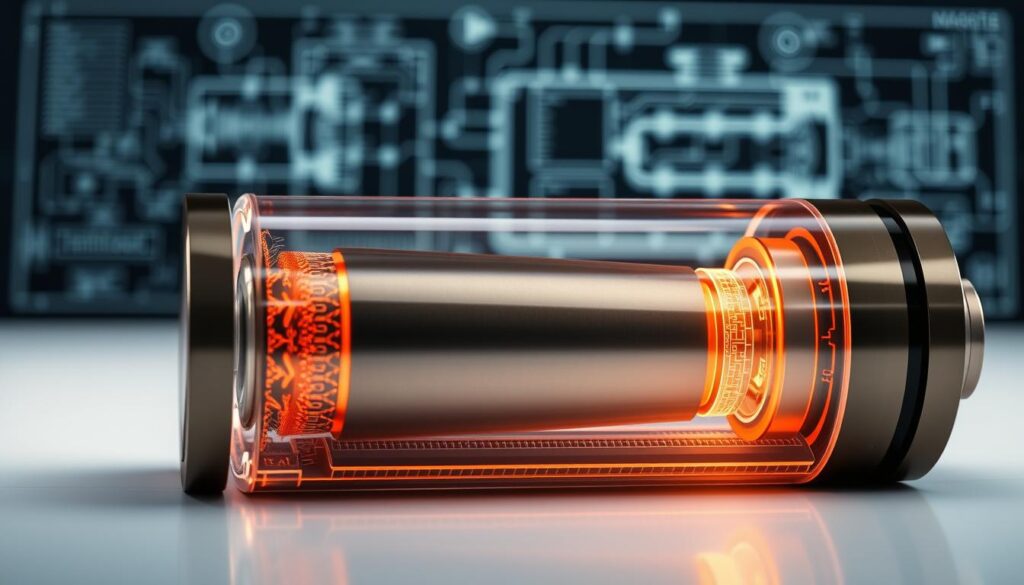
The current state-of-the-art lithium-ion designs have achieved notable improvements in energy density and power density. These advancements are largely due to innovations in cell chemistry and architecture. For instance, the introduction of new cathode materials has enhanced the overall performance of lithium-ion batteries.
Incremental Improvements in Commercial Cells
Commercial lithium-ion cells have seen incremental improvements, particularly with the adoption of silicon anodes and high-nickel cathodes. These advancements have contributed to higher energy density and better overall performance.
Silicon Anodes and High-Nickel Cathodes
The integration of silicon anodes has improved capacity, while high-nickel cathodes have enhanced energy density. These innovations are significant steps towards more efficient lithium-ion batteries.
Advanced Electrolytes and Separators
In addition to anode and cathode improvements, advancements in electrolytes and separators have played a crucial role in enhancing battery safety and performance. New electrolyte formulations have improved ionic conductivity, while advanced separators have reduced the risk of thermal runaway.
Limitations Driving New Research
Despite these advancements, limitations such as cost, safety, and energy density continue to drive research into new battery technologies, including lithium-ion alternatives and Solid-state battery technology. These emerging technologies promise to address the current limitations and further revolutionize the energy storage landscape.
Solid-State Battery Technology: Game-Changing Potential
With its innovative approach to replacing liquid electrolytes with solid materials, solid-state battery technology is poised to transform the future of energy storage. This emerging technology has the potential to address some of the limitations of traditional lithium-ion batteries, offering improved safety, performance, and efficiency.
Working Principles and Materials
Solid-state batteries operate by using a solid electrolyte instead of the liquid or gel-like electrolyte found in conventional batteries. This design change enhances the battery’s safety, energy density, and charging speeds. Researchers are exploring various materials for the solid electrolyte, including ceramics, glass, and polymers, each offering unique benefits and challenges.
Safety and Performance Advantages
The use of a solid electrolyte significantly reduces the risk of thermal runaway and fires associated with liquid electrolytes. Additionally, solid-state batteries can achieve higher energy densities and faster charging rates, making them particularly attractive for electric vehicles and renewable energy storage applications.
Manufacturing Challenges
Despite the promising advantages, several manufacturing challenges need to be addressed before solid-state batteries can be commercially viable. These include scaling up production while maintaining material quality, reducing costs, and ensuring consistent performance across large battery packs.
Commercial Timeline Projections
Industry experts predict that solid-state batteries could enter the market within the next decade, with some companies already announcing plans for limited production. As research continues and manufacturing processes improve, solid-state battery technology is expected to play a crucial role in the future of energy storage.
| Material | Benefits | Challenges |
|---|---|---|
| Ceramics | High ionic conductivity, thermal stability | Brittleness, high production cost |
| Glass | High energy density, non-flammable | Difficult to manufacture, prone to cracking |
| Polymers | Flexibility, easy to process | Lower ionic conductivity, limited thermal stability |
Breakthrough Energy Storage Solutions for Electric Grids
Electric grids require innovative energy storage solutions to handle the variability of renewable energy sources. As the world continues to transition towards cleaner energy, the need for advanced grid storage technologies becomes increasingly critical.
Grid-Scale Battery Systems
Grid-scale battery systems are being deployed to meet the growing demand for energy storage. These systems are crucial for stabilizing the grid and ensuring a reliable supply of electricity.
Lithium-Ion Megaprojects
Lithium-ion batteries are currently the most prevalent technology used in grid-scale energy storage projects. For instance, the Gateway Energy Storage project in California, with a capacity of 250 MW, is one of the largest lithium-ion battery storage projects in the world.
Flow Battery Installations
Flow batteries offer another promising solution for grid-scale energy storage. Their ability to store large amounts of energy makes them particularly suitable for long-duration discharge applications.
| Technology | Capacity | Duration |
|---|---|---|
| Lithium-Ion | 250 MW | 4 hours |
| Flow Batteries | 100 MW | 12 hours |
Renewable Energy Integration
Energy storage solutions play a vital role in integrating renewable energy sources into the grid. By storing excess energy generated during periods of low demand, these systems help to stabilize the grid and ensure a consistent supply of electricity.
“Energy storage is the key to unlocking the full potential of renewable energy. By providing a buffer against variability, it enables a more efficient and reliable grid.” –
Peak Shaving and Frequency Regulation
Grid storage solutions also provide peak shaving and frequency regulation services. By reducing peak demand and regulating frequency, these systems help to maintain grid stability and prevent power outages.
Flow Batteries: The Grid Storage Specialists
As the demand for grid storage solutions grows, flow batteries are becoming increasingly important. Flow batteries are particularly well-suited for grid storage applications due to their scalability and flexibility.
Vanadium Redox Flow Systems
Vanadium redox flow batteries (VRFBs) are one of the most prominent types of flow batteries. They use vanadium ions in different oxidation states to store energy. VRFBs offer long cycle life and flexibility in design, making them suitable for various grid storage needs.
Zinc-Based Flow Technologies
Zinc-based flow batteries are another emerging technology in the field. They offer potentially lower costs compared to VRFBs and are being developed for various grid storage applications. The flexibility in zinc-based systems allows for innovative designs and applications.
Scalability Advantages
One of the key advantages of flow batteries is their scalability. The energy storage capacity can be scaled independently of the power output, making them highly flexible for different grid storage requirements. This is particularly useful for long-duration energy storage applications.
Real-World Implementation Case Studies
Several real-world case studies have demonstrated the effectiveness of flow batteries in grid storage. For instance, VRFBs have been used in various projects worldwide to provide stable and reliable energy storage.
“Flow batteries have shown remarkable performance in grid storage applications, offering a viable solution for renewable energy integration.”
In conclusion, flow batteries, including vanadium redox and zinc-based systems, offer significant advantages for grid storage. Their scalability, flexibility, and potential for long-duration energy storage make them an important technology for the future grid.
Emerging Lithium-Ion Alternatives
As the world continues to electrify, the limitations of lithium-ion technology are becoming increasingly apparent, prompting researchers to explore alternative battery chemistries. The need for more sustainable, efficient, and cost-effective energy storage solutions has driven innovation in this field.
Sodium-Ion Battery Development
Sodium-ion batteries are gaining attention due to the abundance and low cost of sodium. Research is focused on improving the energy density and cycle life of these batteries, making them a viable alternative to lithium-ion technology.
Aluminum and Zinc-Based Systems
Aluminum and zinc-based battery systems offer another promising avenue. These metals are more abundant and potentially cheaper than lithium, with zinc-based batteries already showing competitive performance in certain applications.
Iron-Air and Metal-Air Technologies
Iron-air and other metal-air batteries represent a significant shift in energy storage technology. By using oxygen from the air to react with metal anodes, these batteries can achieve higher energy densities at lower costs.
Organic and Bio-Inspired Materials
The development of organic and bio-inspired materials for energy storage is an area of growing interest. These materials offer the potential for more sustainable production and reduced environmental impact, aligning with global efforts to create greener technologies.
The exploration of lithium-ion alternatives is crucial for the future of energy storage, enabling more widespread adoption of renewable energy sources and reducing our reliance on fossil fuels.
Electric Vehicle Battery Breakthroughs
The electric vehicle (EV) industry is on the cusp of a revolution, driven by breakthroughs in battery technology that promise to extend range, improve charging times, and enhance overall performance. As EVs become increasingly popular, the demand for more efficient and effective battery solutions is driving innovation in the field.
Range Extension Technologies
One of the key areas of focus for EV battery development is range extension. New battery chemistries and designs are being explored to increase the energy density of batteries, allowing EVs to travel farther on a single charge. For instance, advancements in lithium-ion technology have enabled the development of more efficient batteries that can store more energy relative to their size and weight.
Fast-Charging Innovations
Fast-charging technology is another critical area of development. Rapid charging capabilities are being integrated into EV batteries, enabling drivers to recharge their vehicles quickly and efficiently. This is achieved through advancements in cell design and thermal management systems.
Cell Design for Rapid Charging
Innovations in cell design are crucial for enabling rapid charging. New cell architectures are being developed to reduce internal resistance and improve heat dissipation, allowing for faster charging times without compromising battery longevity.
Thermal Management Systems
Effective thermal management is essential for maintaining battery performance and longevity during rapid charging. Advanced cooling systems are being integrated into EV batteries to regulate temperature and prevent overheating, ensuring safe and efficient charging.
Battery Longevity and Second-Life Applications
Beyond range and charging speed, battery longevity is a critical factor in the overall cost-effectiveness and sustainability of EVs. Research into battery degradation and second-life applications is underway, exploring ways to repurpose EV batteries for energy storage and other uses, thereby reducing waste and enhancing the overall value proposition of EVs.
EV Charging Infrastructure Evolution
As the demand for electric vehicles continues to surge, the need for advanced charging infrastructure becomes increasingly critical. The evolution of EV charging is not just about increasing the number of charging points, but also about enhancing the technology behind them.
Vehicle-to-Grid (V2G) Integration
Vehicle-to-Grid (V2G) technology allows EVs to supply energy back to the grid, enhancing grid stability and providing additional revenue streams for vehicle owners. This technology is crucial for balancing energy supply and demand, especially during peak hours.
Wireless Charging Developments
Wireless charging is making EV charging more convenient. Wireless charging pads installed in homes, garages, or public parking areas enable EVs to charge without the need for cables, enhancing user experience.

Ultra-Fast Charging Networks
The development of ultra-fast charging networks is reducing charging times significantly, making EVs more appealing to consumers. These networks can charge an EV to 80% in under 30 minutes, comparable to refueling a gasoline vehicle.
Smart Charging and Load Management
Smart charging systems optimize energy distribution by charging EVs during off-peak hours or when renewable energy is available. This not only reduces strain on the grid but also lowers charging costs for consumers.
- Optimized energy consumption
- Reduced charging costs
- Enhanced grid stability
The evolution of EV charging infrastructure is pivotal in supporting the widespread adoption of electric vehicles. As technology continues to advance, we can expect even more innovative solutions to emerge.
Overcoming Energy Storage Challenges
As the energy storage industry continues to evolve, it faces numerous challenges that must be addressed to ensure its sustainable growth. The increasing demand for energy storage solutions, driven by the transition to renewable energy sources and the proliferation of electric vehicles, has highlighted several key areas that require improvement.
Material Supply Chain Constraints
The supply chain for critical materials such as lithium and cobalt is a significant concern. Recent developments in recycling technologies and the exploration of alternative materials are crucial steps toward mitigating these constraints.
| Material | Current Challenges | Potential Solutions |
|---|---|---|
| Lithium | Supply chain vulnerabilities | Recycling, alternative sources |
| Cobalt | Ethical sourcing concerns | Substitution with other materials |
Safety Engineering Advancements
Safety remains a paramount concern in energy storage, particularly with the increasing adoption of solid-state battery technology. Advances in safety engineering are necessary to prevent battery-related accidents and ensure the reliability of energy storage systems.
Recycling and Circular Economy Approaches
Implementing recycling and circular economy approaches can significantly reduce waste and improve the sustainability of energy storage systems. This involves designing batteries with recyclability in mind and developing efficient recycling technologies.
Regulatory and Policy Considerations
Regulatory frameworks and policies play a crucial role in shaping the energy storage industry. Supportive policies can encourage innovation and investment, while inadequate regulations can hinder the adoption of energy storage technologies.
By addressing these challenges, the energy storage industry can continue to evolve and support the transition to a more sustainable energy future.
Conclusion: Powering Tomorrow’s Sustainable Energy Ecosystem
The battery revolution is transforming the energy landscape, enabling widespread adoption of renewable energy sources and electric vehicles. As energy storage technologies continue to evolve, innovative solutions are emerging to address the challenges of a sustainable energy ecosystem.
Advancements in solid-state batteries, flow batteries, and other emerging technologies are poised to play a crucial role in powering tomorrow’s energy needs. The future of energy storage is bright, with The Battery Revolution driving significant progress in Energy Storage solutions.
As the energy sector continues to transition towards a more sustainable future, the importance of Energy Storage cannot be overstated. With ongoing research and development, we can expect to see even more efficient and cost-effective energy storage solutions emerge, further accelerating the adoption of renewable energy sources and electric vehicles.