
Blog
Sustainable Plates: The Rise of Cellular Agriculture, Vertical Farming, and Alternative Proteins**

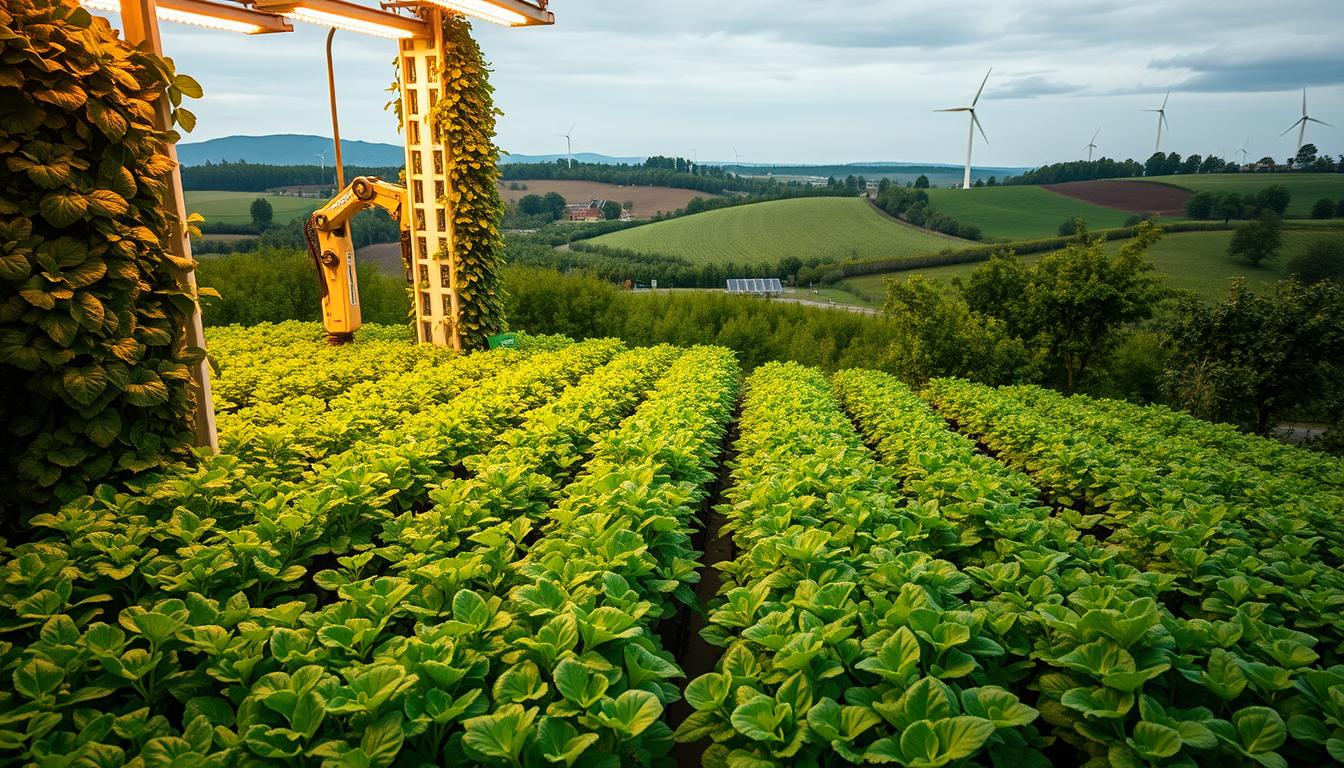
The world is on the cusp of a significant shift in how we produce and consume protein. With the global population expected to reach 9 billion, the demand for protein is estimated to grow by up to 70% by 2050. Traditional meat production is a significant contributor to greenhouse gas emissions and resource depletion, making it unsustainable in the long term.
Cellular agriculture and vertical farming are emerging as game-changers in the quest for sustainable food production. According to a report by Diamandis, cellular agriculture has seen a significant reduction in production costs, making it a viable alternative to traditional methods. For more insights on this trend, visit Diamandis’ blog on cellular agriculture and vertical.
Key Takeaways
- Cellular agriculture and vertical farming offer sustainable alternatives to traditional meat production.
- The global demand for protein is expected to grow by up to 70% by 2050.
- Cellular agriculture reduces production costs and environmental impact.
- Vertical farming can increase crop yields while reducing transport costs and carbon footprint.
- The global vertical farm industry is projected to reach over $7 billion by 2025.
The Global Food Crisis: Why We Need Innovation
The world is facing a severe food crisis, driven by the environmental impact of traditional agriculture. The current methods of food production are not only harming the planet but are also becoming increasingly unsustainable.
Environmental Impact of Traditional Agriculture
Traditional agriculture has a significant environmental footprint. Two critical areas of concern are land use and water consumption.
Land Use and Deforestation
The expansion of agricultural land has led to widespread deforestation, with forests being cleared at an alarming rate to make way for crops and livestock. This not only destroys habitats but also contributes to climate change.
Water Consumption and Pollution
Agriculture is a major consumer of global water resources, and the use of fertilizers and pesticides has led to significant water pollution. This affects not only the environment but also human health.
Population Growth and Food Demand Projections
The global population is projected to reach 9.7 billion by 2050, putting additional pressure on the food system. To meet this demand, we need to adopt innovative solutions like vertical farming technology to increase food production sustainably.
Food Tech Revolution: Reimagining Our Food Systems
The food tech revolution is transforming the way we produce, consume, and think about food. This revolution is driven by the need for more sustainable and efficient food production methods.
Defining the Food Tech Ecosystem
The food tech ecosystem encompasses a broad range of innovations, from data-driven farming approaches to automation and AI in food production. These technologies are being integrated into various stages of the food supply chain.
How Technology is Disrupting Traditional Agriculture
Technology is revolutionizing traditional agriculture through precision farming and vertical farming.
Data-Driven Farming Approaches
involve the use of sensors, drones, and satellite imaging to optimize crop yields and reduce waste.
Automation and AI in Food Production
Automation and AI are being used to enhance efficiency and consistency in food production. For instance, AI-powered systems can monitor and control farming conditions, while automated machinery can streamline harvesting and processing.
The integration of cultivated meat and other alternative proteins is also a significant aspect of the food tech revolution, offering more sustainable options for consumers.
Understanding Cellular Agriculture: Meat Without the Farm
The concept of cellular agriculture is simple yet groundbreaking: producing meat by growing animal cells in controlled environments. This method eliminates the need for raising and slaughtering animals, potentially reducing the environmental impact of meat production.
The Science Behind Growing Cells
Cellular agriculture involves taking cells from animals and growing them in bioreactors, where they are provided with the necessary nutrients and conditions to proliferate. This process mimics the natural growth of cells within an animal but is done in a controlled, lab-based setting.
Key steps in the process include:
- Cell sampling: Cells are taken from animal tissue.
- Cell cultivation: Cells are grown in a nutrient-rich medium.
- Scaling up: Cultivated cells are scaled up in bioreactors.
Key Production Methods and Technologies
Several technologies are crucial to the success of cellular agriculture, including precision fermentation, which enables the production of high-quality animal cell growth media. Bioreactors that can support large-scale cell cultivation are also essential.
Current Research Breakthroughs
Recent advancements have improved the efficiency and cost-effectiveness of cellular agriculture. For instance, companies are developing serum-free media, reducing reliance on animal-derived products. These breakthroughs are bringing cultivated meat closer to market readiness.
As Dr. Mark Post, a pioneer in cultivated meat, notes, “The potential of cellular agriculture to transform the meat industry is vast, offering a more sustainable and ethical alternative to traditional meat production.”
Cultivated Meat: From Lab to Table
Cultivated meat, grown in labs rather than on farms, is emerging as a viable solution to the environmental impact of traditional meat production. This innovative approach to food production is gaining attention for its potential to reduce greenhouse gas emissions and promote sustainable agriculture.
Production Process Explained
The production of cultivated meat involves several key steps. First, cells are selected and cultivated. This process begins with obtaining animal cells, which are then nourished with a growth medium to proliferate.
Cell Selection and Cultivation
Cell selection is crucial as it determines the quality and characteristics of the final product. Companies are exploring various cell types, including muscle and fat cells, to achieve the desired taste and texture.
Scaffolding and Structure Development
Scaffolding provides the structure for the cells to grow into meat-like tissue. This is achieved through various techniques, including the use of biodegradable materials that support cell growth.
Leading Companies Pioneering the Market
Several companies are at the forefront of cultivated meat production. Some of the notable players include Memphis Meats, Aleph Farms, and Mosa Meat. These companies are working on scaling up production and improving the quality of cultivated meat.
| Company | Product Focus | Stage of Development |
|---|---|---|
| Memphis Meats | Beef, Chicken, Duck | Commercialization |
| Aleph Farms | Steak | Pilot Production |
| Mosa Meat | Beef Burgers | Scaling Up |
Taste, Texture, and Consumer Experience
The taste and texture of cultivated meat are designed to mimic traditional meat. Companies are working to enhance the consumer experience by improving these aspects. 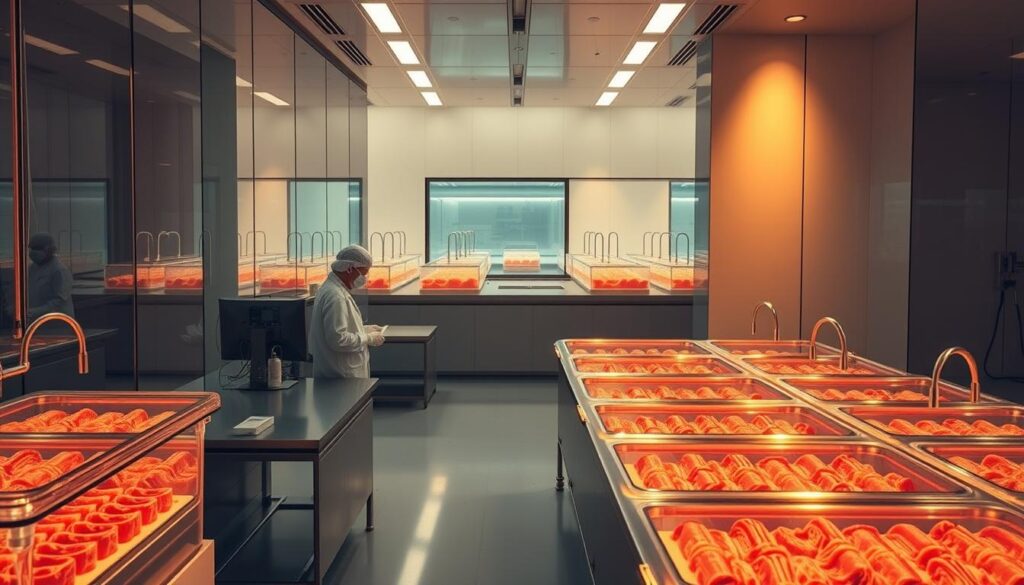
Cultivated meat represents a significant step forward in food technology, offering a more sustainable and potentially more humane alternative to traditional meat production. As the industry continues to evolve, it is likely to play a major role in shaping the future of food.
Precision Fermentation: Engineering Nature’s Processes
By engineering nature’s processes, precision fermentation is emerging as a key player in the sustainable production of food components. This innovative technology leverages microorganisms to produce a variety of food products, offering a more environmentally friendly alternative to traditional methods.
How Microorganisms Create Food Components
Microorganisms such as bacteria and yeast are engineered to produce specific food components through fermentation. This process involves optimizing the microorganisms’ metabolic pathways to generate desired compounds, such as proteins, fats, and flavors. The precision lies in the ability to control the fermentation process, ensuring high-quality and consistent output.
Beyond Dairy: Eggs, Fats, and Proteins
While precision fermentation has been notably applied in dairy alternatives, its potential extends far beyond. Companies are now using this technology to produce egg proteins, various fats, and other proteins, catering to the growing demand for sustainable and versatile food ingredients. This broad application underscores the versatility of precision fermentation.
Scaling Challenges and Solutions
Despite its promise, scaling precision fermentation technology poses significant challenges, including the need for large-scale bioreactors and the optimization of fermentation conditions. To address these, companies are investing in advanced bioprocessing technologies and scaling up their production facilities. The table below outlines some of the key challenges and potential solutions:
| Challenge | Solution |
|---|---|
| Bioreactor Scale-Up | Advanced bioreactor designs and materials |
| Fermentation Optimization | AI-driven process optimization and monitoring |
| Cost Reduction | Economies of scale and process efficiencies |
As precision fermentation continues to evolve, it is poised to play a crucial role in the future of sustainable food production, offering innovative solutions to global food challenges.
Vertical Farming Technology: Agriculture’s Upward Expansion
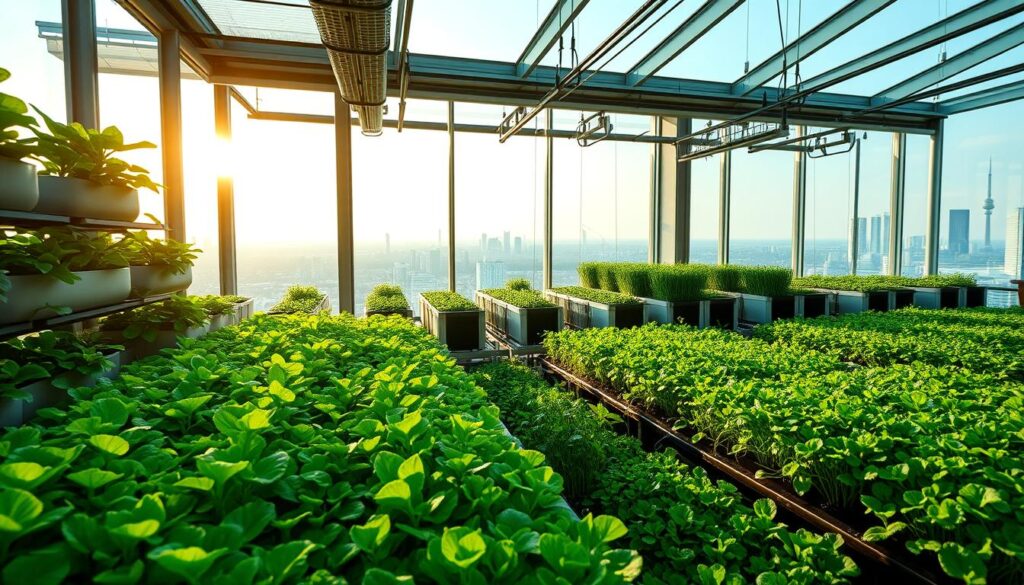
Vertical farming is transforming agriculture by stacking crops in vertically arranged layers, maximizing space and reducing environmental impact. This innovative approach to farming is gaining traction as a sustainable solution to the global food crisis.
System Types: Hydroponics, Aeroponics, and Aquaponics
Vertical farming encompasses various system types, each with its unique advantages. Hydroponics involves growing plants in a nutrient-rich solution rather than soil, allowing for precise control over nutrient intake. Aeroponics takes this a step further by suspending roots in the air and misting them with nutrients, promoting healthy root development. Aquaponics combines hydroponics with fish farming, creating a symbiotic ecosystem where plants and fish thrive together.
Lighting, Climate Control, and Automation
Effective lighting is crucial in vertical farming, with LED grow lights being the preferred choice due to their energy efficiency and customizable spectrum. Climate control systems maintain optimal temperature and humidity levels, ensuring consistent growing conditions. Automation plays a key role in monitoring and adjusting these parameters, as well as managing nutrient delivery and pruning schedules.
Crop Selection and Optimization
Crop selection is a critical aspect of vertical farming, with different crops suited to various systems and market demands. Leafy greens and herbs are particularly well-suited due to their short growth cycles and high market value.
Leafy Greens and Herbs
Leafy greens such as lettuce and kale thrive in vertical farming systems, offering a consistent product that meets consumer demand. Herbs like basil and cilantro also perform well, providing fresh flavor to culinary markets.
Expanding to Fruits and Other Crops
While leafy greens dominate the current market, research is underway to expand vertical farming to include fruits and other crops. Strawberries and tomatoes are among the fruits being explored, with promising results in controlled environments.
| Crop | Growth Cycle | Market Demand |
|---|---|---|
| Leafy Greens | 20-30 days | High |
| Herbs | 15-25 days | Moderate |
| Strawberries | 60-90 days | Growing |
Plant-Based Protein Innovations: Beyond the First Generation
Beyond the first generation of plant-based proteins, new innovations are setting a higher standard. The industry is witnessing significant advancements in technology and product development, making plant-based options more appealing and accessible to consumers.
Advanced Extrusion and Texturizing Technologies
One of the key innovations in plant-based protein production is the development of advanced extrusion and texturizing technologies. These technologies enable manufacturers to create products that closely mimic the texture and appearance of meat, enhancing consumer acceptance. Extrusion technology involves pushing plant-based materials through a die to create specific shapes and textures, while texturizing adds layers of complexity to the product’s mouthfeel.
Novel Protein Sources: Algae, Fungi, and Legumes
The search for novel protein sources is another area of innovation. Algae, fungi, and various legumes are being explored for their potential to provide high-quality protein. These sources not only offer nutritional benefits but also contribute to sustainability by requiring less land and water compared to traditional livestock farming.
Mimicking Meat: Flavor, Texture, and Functionality
Efforts to replicate the flavor, texture, and functionality of meat are at the forefront of plant-based protein innovations. Companies are investing in research to understand the sensory attributes of meat and develop plant-based alternatives that match these characteristics. This involves not just the protein itself but also the development of fat mimics and flavor enhancers.
The future of plant-based proteins looks promising, with ongoing innovations poised to make a significant impact on the food industry. As technology continues to evolve, we can expect to see even more sophisticated products that cater to diverse consumer preferences.
Environmental Benefits of Next-Generation Food Production
The environmental benefits of next-generation food production are multifaceted and far-reaching. These innovative methods are poised to significantly reduce the ecological footprint of agriculture.
Greenhouse Gas Emission Reductions
Next-generation food production methods, such as cellular agriculture and precision fermentation, can significantly reduce greenhouse gas emissions. By producing meat and other animal products in controlled environments, we can minimize the need for livestock farming, a major contributor to emissions.
Land and Water Conservation Metrics
These new methods also offer substantial opportunities for land and water conservation. By decoupling food production from traditional agriculture, we can reduce the amount of land required for farming and minimize water usage.
Biodiversity Protection Opportunities
Biodiversity protection is another critical benefit. Next-generation food production can help reduce agricultural expansion into natural habitats.
Reducing Agricultural Expansion
By producing food in controlled environments or using novel protein sources, we can preserve natural ecosystems and protect biodiversity.
Decreasing Chemical Inputs
Additionally, these methods can help decrease chemical inputs in agriculture. With precision fermentation and cellular agriculture, the need for pesticides, herbicides, and fertilizers is significantly reduced.
The Economics of Food Tech: Investment and Scalability
The Food Tech industry is witnessing a significant surge in investments, driven by the potential for scalability and innovation. As the sector continues to evolve, understanding the economic aspects of Food Tech becomes crucial for stakeholders.
Venture Capital and Corporate Investment Trends
Venture capital and corporate investments are playing a pivotal role in shaping the Food Tech landscape. Companies like Beyond Meat and Impossible Foods have received significant investments, driving growth in the alternative protein sector. According to a report, investments in Food Tech have seen a substantial increase over the past few years, with a notable rise in venture capital funding.
| Year | Investment in Food Tech ($Billion) | Growth Rate (%) |
|---|---|---|
| 2020 | 2.5 | 20 |
| 2021 | 3.2 | 28 |
| 2022 | 4.1 | 32 |
Cost Reduction Pathways and Timelines
Achieving scalability in Food Tech requires significant cost reductions. Companies are exploring various pathways, including precision fermentation and cellular agriculture, to lower production costs. Timelines for achieving scalability vary, but most companies aim to reduce costs by 30% over the next five years.
Job Creation in the Alternative Protein Sector
The alternative protein sector is poised to create new job opportunities across various disciplines, from research and development to manufacturing and marketing. As the sector grows, it is expected to contribute significantly to employment in the food industry.
In conclusion, the economics of Food Tech is a complex and evolving field, driven by investment trends, scalability, and innovation. As the sector continues to grow, understanding these economic aspects will be crucial for stakeholders.
Food Security Solutions: Feeding 10 Billion Sustainably
With the world’s population projected to reach 10 billion, the need for sustainable food production methods has never been more pressing. Ensuring global food security while minimizing environmental impact is a complex challenge that requires innovative solutions.
One approach to achieving sustainable food security is through decentralized production models. By locating production closer to consumption areas, decentralized models can reduce transportation costs and emissions, improving the overall efficiency of the food system.
Decentralized Production Models
Decentralized production involves using local resources and technologies to produce food. This can include urban farming, vertical agriculture, and community-supported agriculture programs. Such models not only reduce the carbon footprint associated with food transportation but also provide fresh produce to local communities.
Climate-Resilient Food Systems
Developing climate-resilient food systems is crucial for ensuring food security in the face of climate change. This involves implementing agricultural practices and technologies that can withstand extreme weather conditions, such as drought-resistant crops and hydroponic systems.
Addressing Nutritional Needs Globally
Addressing nutritional needs globally requires a multifaceted approach that includes enhancing the nutritional content of staple foods, promoting diverse diets, and ensuring access to nutrient-rich foods for vulnerable populations. Technologies like biofortification can play a significant role in this effort.
Regulatory Challenges and Consumer Adoption
Regulatory frameworks and consumer perceptions are pivotal in shaping the future of sustainable food production. As novel foods and technologies emerge, regulatory bodies face the challenge of balancing innovation with consumer safety.
FDA and USDA Oversight of Novel Foods
The FDA and USDA play crucial roles in overseeing the introduction of novel foods into the market. Clear regulatory guidelines are essential for companies to navigate the approval process efficiently. The FDA is responsible for ensuring the safety of food products, while the USDA focuses on the labeling and inspection of meat, poultry, and egg products.
Labeling Debates and Terminology
Labeling debates are a contentious issue, with discussions centering on the terminology used to describe novel foods. Transparent labeling is crucial for consumer trust and understanding. The use of terms like “lab-grown meat” or “plant-based alternatives” needs to be standardized to avoid consumer confusion.
Marketing Strategies for New Food Technologies
Effective marketing strategies are vital for the successful adoption of new food technologies. Companies must focus on education and transparency to build consumer trust.
Education and Transparency
Educating consumers about the benefits and production processes of novel foods can enhance acceptance. Transparency regarding ingredients, production methods, and nutritional content is essential.
Addressing Health and Safety Concerns
Addressing health and safety concerns is paramount. Companies must provide clear information about the safety and nutritional value of their products to alleviate consumer apprehensions.
By navigating regulatory challenges and fostering consumer adoption through education and transparency, the food tech industry can continue to innovate and provide sustainable food solutions.
Conclusion: The Future of Sustainable Food Production
The future of food production is being reshaped by innovative technologies such as cellular agriculture, vertical farming, and alternative proteins. These advancements have the potential to transform the way we produce, consume, and think about food, making sustainable food production a reality.
By leveraging technologies like precision fermentation and cultivated meat, the food industry can significantly reduce its environmental footprint, including greenhouse gas emissions and land use. Vertical farming and plant-based protein innovations also offer promising solutions to improve food security and meet the nutritional needs of a growing global population.
As the world moves towards a more sustainable food system, the role of Food Tech will become increasingly important. With continued investment and innovation, the future of sustainable food production looks bright, offering a hopeful vision for a world where food is produced, consumed, and enjoyed in a way that is environmentally friendly, socially responsible, and economically viable.