
Blog
Spatial Learning: How Augmented and Virtual Reality are Reshaping Education and Job Training**

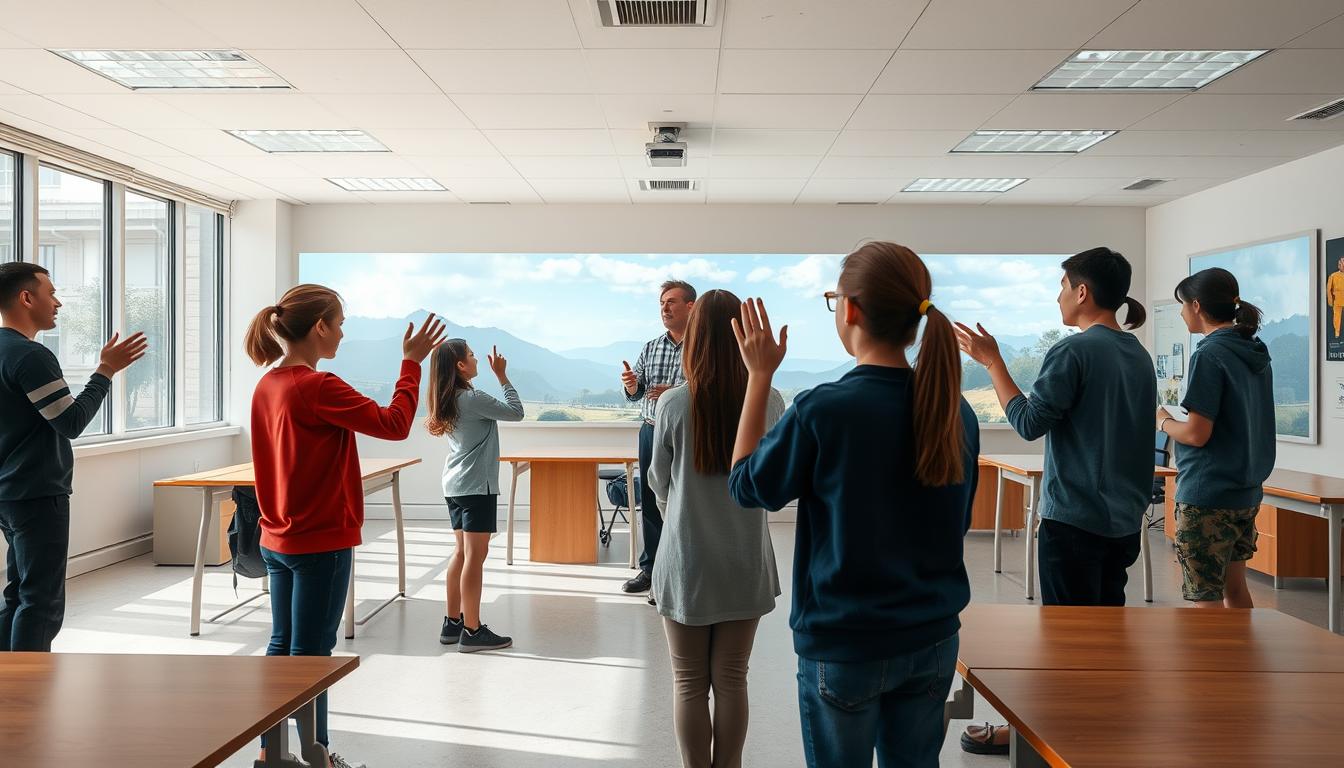
The way we learn is undergoing a significant transformation, thanks to the advent of augmented reality (AR) and virtual reality (VR) technologies. These innovative tools are revolutionizing the education sector and job training programs by providing immersive experiences that enhance understanding and retention.
Spatial learning, which involves understanding and navigating through spaces, is becoming increasingly important in modern education. By leveraging AR/VR, learners can engage with complex concepts in a more interactive and engaging manner, leading to improved outcomes.
Key Takeaways
- AR/VR technologies are transforming the education sector.
- Immersive learning experiences enhance understanding and retention.
- Spatial learning is becoming crucial in modern education.
- Interactive learning leads to improved educational outcomes.
- AR/VR in education is on the rise.
The Evolution of Spatial Learning Technologies
The integration of augmented reality (AR) and virtual reality (VR) in education marks a new era in spatial learning. This evolution is transforming the way we learn and interact with information.
From Traditional Learning to Digital Immersion
The journey from traditional teaching methods to immersive digital experiences has been significant. Educational technology has advanced considerably, paving the way for more interactive and engaging learning environments.
Historical Context of Educational Technology
Early educational technology focused on computer-based training and multimedia presentations. These innovations laid the groundwork for today’s immersive technologies.
The Shift Toward Interactive Learning
The shift toward interactive learning has been driven by the need for more engaging educational experiences. AR in classrooms is becoming increasingly popular, allowing students to interact with virtual objects and environments.
The Emergence of Immersive Learning Environments
Immersive learning environments are revolutionizing education. VR job training is one such application, providing hands-on experience in a controlled virtual setting.
Early Adopters and Pioneering Programs
| Institution | Program | Technology Used |
|---|---|---|
| University of Michigan | Virtual Reality Training | VR Headsets |
| Stanford University | Augmented Reality in Classrooms | AR Software |
Understanding AR/VR Education: Core Technologies and Principles
Immersive technologies, including AR and VR, are at the forefront of educational innovation. These technologies are not just enhancing the learning experience; they’re revolutionizing it by providing immersive learning benefits that traditional methods can’t match.
Defining Augmented Reality in Learning Contexts
Augmented Reality (AR) overlays digital information onto the real world, enhancing the learning experience by making it more interactive. AR can be used through various devices, from smartphones to specialized AR glasses.
AR Hardware and Software Platforms
The effectiveness of AR in education depends on both hardware and software. Key hardware includes:
- Smartphones and tablets
- AR glasses like Microsoft HoloLens
Software platforms such as Google’s ARCore and Apple’s ARKit enable developers to create AR experiences.
Virtual Reality’s Role in Educational Environments
Virtual Reality (VR) creates entirely immersive environments, simulating real-world situations for training and education. This is particularly valuable for skill simulation technology, allowing learners to practice complex skills in a safe, controlled environment.
VR Headsets and Classroom Integration
VR headsets like Oculus Rift and HTC Vive are becoming more prevalent in classrooms. These devices require compatible software and content designed for educational purposes.
Mixed Reality and the Spectrum of Immersive Technologies
Mixed Reality (MR) combines elements of both AR and VR, allowing for interactions between digital and real-world objects. Understanding the spectrum of immersive technologies is crucial for educators to choose the right tools for their teaching needs.
By leveraging these technologies, educators can create engaging, interactive learning experiences that enhance student outcomes. The key is understanding the core technologies and principles behind AR, VR, and MR to effectively integrate them into educational settings.
Transforming Classroom Experiences with AR
Augmented Reality (AR) is revolutionizing the way students learn by bringing interactive, immersive experiences into the classroom. By overlaying digital information onto the real world, AR creates engaging lessons that can enhance understanding and retention.
AR Applications in K-12 Education
In K-12 education, AR is being used to make complex concepts more accessible. For instance, AR can help students visualize historical events or scientific processes in 3D.
Subject-Specific AR Tools and Resources
Various AR tools are available for different subjects. For example, in math, AR can be used to create interactive geometry lessons, while in science, it can simulate laboratory experiments.
- Math: Interactive geometry and graphing tools
- Science: Simulated lab experiments and 3D models of complex systems
- History: Interactive timelines and 3D reconstructions of historical sites
Higher Education Use Cases
In higher education, AR is being used for more advanced applications, including laboratory and research projects.
Laboratory and Research Applications
AR can enhance laboratory experiences by providing students with interactive guides and real-time data analysis.
“AR technology has the potential to revolutionize the way we conduct scientific research and education by providing immersive, interactive experiences that enhance understanding and engagement.”
Tools and Platforms Revolutionizing AR in Classrooms
Several platforms are making it easier to integrate AR into classroom teaching. These include AR development tools and educational content platforms.
| Platform | Description | Features |
|---|---|---|
| Google Expeditions | AR/VR platform for educational field trips | Interactive 3D models, guided tours |
| zSpace | Interactive learning platform using AR/VR | Interactive simulations, real-time data analysis |
Virtual Reality’s Impact on Experiential Learning
Experiential learning is being redefined by Virtual Reality, offering students a more engaging and effective way to absorb information. This technology is not just enhancing traditional learning methods; it’s revolutionizing the entire educational experience.
Creating Immersive Learning Environments
Virtual Reality creates immersive learning environments that engage students on multiple sensory levels. By simulating real-world environments, VR makes complex concepts more tangible and easier to understand.
Sensory Engagement and Presence
The immersive nature of VR promotes sensory engagement and presence, making learners feel as though they are part of the environment. This heightened sense of presence can lead to improved retention and recall of information.
Virtual Field Trips: Expanding Educational Horizons
Virtual field trips are one of the most exciting applications of VR in education. They allow students to explore historical sites, visit distant planets, or walk through complex biological systems, all from the safety of their classrooms.
Global and Historical Exploration Opportunities
With VR, students can embark on virtual journeys to different parts of the world, exploring historical events or cultural practices in a highly interactive manner. This not only enhances their understanding of the subject matter but also fosters global awareness and empathy.
Case Studies of Successful VR Implementation in Schools
Several schools have successfully integrated VR into their curricula, with notable results. For instance, a study on VR implementation in science classes showed a significant improvement in student engagement and test scores.
“The use of VR in our science curriculum has been a game-changer. Students are more engaged, and we’ve seen a marked improvement in their understanding of complex concepts.”
| School | VR Application | Outcome |
|---|---|---|
| Lincoln High | Science Simulations | 25% increase in test scores |
| Springfield Elementary | Virtual Field Trips | 90% student engagement rate |
Revolutionizing Professional Training Through Immersive Technologies
Immersive technologies are transforming the landscape of professional training across various industries. By leveraging VR job training and other immersive tools, companies can provide employees with hands-on experience in a controlled environment.
VR Job Training Across Industries
VR is being adopted across multiple sectors for its ability to simulate real-world scenarios without the risks associated with traditional training methods.
Healthcare and Medical Training
In healthcare, VR is used to train medical professionals in complex procedures, enhancing their skills through realistic simulations.
Manufacturing and Technical Skills Development
Manufacturing industries utilize VR for training in technical skills, allowing workers to practice and learn without the need for physical equipment.
Skill Simulation Technology in Professional Development
Skill simulation technology plays a crucial role in professional development by providing realistic training scenarios that prepare employees for various challenges.
High-Risk Scenario Training
This technology is particularly valuable for high-risk scenario training, where employees can learn to respond to emergencies without being exposed to actual danger.
Cost-Benefit Analysis of VR Training Programs
While the initial investment in VR training technology can be significant, the long-term benefits often outweigh the costs. Companies see reductions in training time and improvements in employee performance.
The Science Behind AR/VR Education Success
By leveraging AR and VR, educators can significantly improve student outcomes in various subjects. The science behind their success lies in how these technologies interact with our brains, enhancing learning experiences.
Enhanced Retention and Recall
One of the key immersive learning benefits is the improvement in retention and recall. When information is presented in an interactive, 3D environment, it’s easier for students to remember.
Memory Formation in Immersive Environments
Research has shown that immersive experiences can lead to more effective memory formation. This is because AR and VR engage multiple senses, creating a richer, more complex memory trace.
Spatial Cognition and Problem-Solving Skills
AR and VR also enhance spatial cognition and problem-solving skills. By allowing students to manipulate virtual objects and environments, these technologies improve their understanding of complex spatial relationships.
Neurological Impacts of Immersive Learning
The neurological impacts of AR and VR on cognitive development are significant. Studies have shown that immersive learning can lead to increased activity in areas of the brain associated with learning and memory.
Research Findings on Cognitive Development
Recent research findings support the idea that AR and VR can have a positive impact on cognitive development. For instance, studies have shown improvements in areas such as attention, memory, and processing speed.
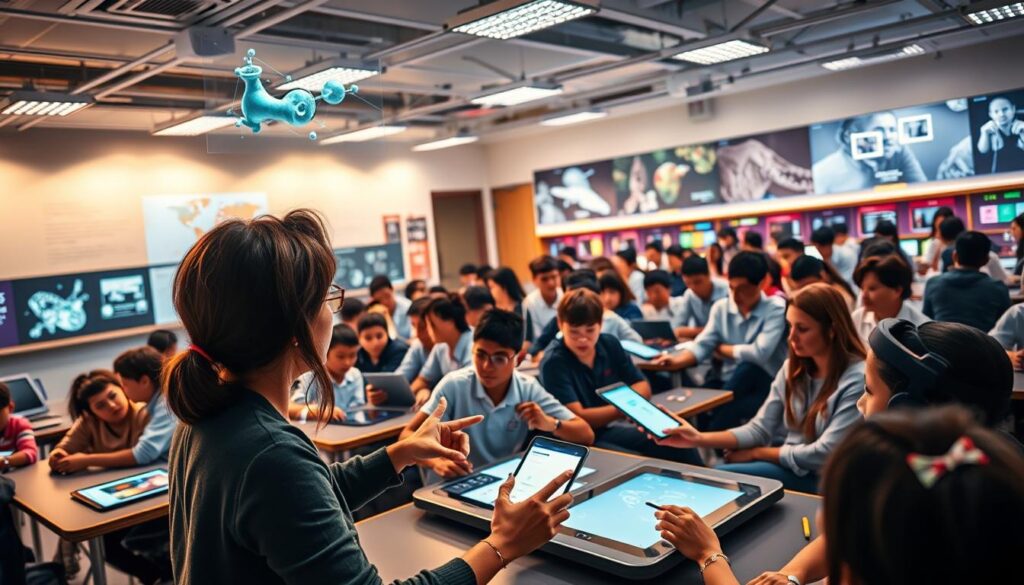
In conclusion, the science behind AR/VR education success is multifaceted, involving enhanced retention and recall, improved spatial cognition, and positive neurological impacts. As AR in classrooms becomes more prevalent, we can expect to see continued improvements in educational outcomes.
Accessibility and Inclusion in Spatial Learning
Immersive technologies are revolutionizing the educational landscape by making learning more accessible. The use of Augmented Reality (AR) and Virtual Reality (VR) in education is not only enhancing the learning experience but also making it more inclusive for students from various backgrounds and with different learning needs.
Bridging Educational Gaps with Immersive Technology
AR and VR can bridge educational gaps by providing virtual field trips to places that might be difficult or impossible for some students to visit physically. This is particularly beneficial for students in rural or underserved communities who lack access to resources and experiences that their urban counterparts take for granted.
Rural and Underserved Community Applications
For instance, a study on the benefits of AR and VR in education highlights their potential in reaching remote students. You can read more about this in a systematic narrative review.
Designing for Diverse Learning Needs
Immersive technologies can be adapted to cater to diverse learning needs, including students with disabilities. For example, VR can be used to create customized learning experiences that are tailored to individual students’ needs.
Adaptations for Students with Disabilities
These adaptations can include sign language interpretation, audio descriptions, or customized navigation controls. By making these adjustments, educational institutions can ensure that all students have an equal opportunity to benefit from immersive learning.
Economic Considerations and Digital Divide Challenges
While AR and VR offer many benefits, there are also economic considerations and challenges related to the digital divide. The cost of implementing these technologies can be a barrier for some institutions.
| Challenge | Solution |
|---|---|
| High Cost of VR Equipment | Explore cost-effective alternatives or shared resource models |
| Limited Access to High-Speed Internet | Implement offline-capable solutions or partner with telecom providers |
By understanding these challenges and developing strategies to address them, educators can work towards creating a more inclusive and equitable learning environment.
Implementation Challenges and Practical Solutions
As AR/VR continues to reshape the educational landscape, several implementation challenges arise. Effective integration of these technologies requires careful planning and strategic solutions.
Technical Infrastructure Requirements
One of the primary challenges is ensuring that educational institutions have the necessary technical infrastructure to support AR/VR technologies. This includes robust hardware and sufficient bandwidth to handle data-intensive applications.
Bandwidth and Hardware Considerations
Institutional bandwidth is a critical factor, as AR/VR applications often require high-speed internet connectivity. Moreover, the hardware used must be compatible with the latest AR/VR software, necessitating regular updates and investments in technology.
Educator Training and Support Systems
Another significant challenge is providing educators with the necessary training and support to effectively integrate AR/VR into their teaching practices. This involves not only technical training but also pedagogical guidance.
Professional Development Models
Effective professional development models should include hands-on training, ongoing support, and opportunities for educators to share best practices. This helps build confidence and competence in using AR/VR tools.
Addressing Health and Safety Concerns
Health and safety concerns are also paramount when implementing AR/VR in educational settings. Issues such as excessive screen time, physical comfort, and data privacy must be addressed.
Screen Time and Physical Comfort Issues
To mitigate these risks, educators should monitor students’ screen time and ensure that they take regular breaks. Additionally, the physical learning environment should be designed to promote comfort and reduce the risk of accidents.
Privacy and Data Security Considerations
Data privacy is another critical concern. Educational institutions must ensure that AR/VR platforms comply with relevant data protection regulations and that sensitive information is safeguarded.
By addressing these challenges and implementing practical solutions, educational institutions can harness the full potential of AR/VR to enhance teaching and learning experiences.
“The future of education is not just about technology; it’s about using technology to enhance human connection and understanding.”
Measuring Success: Assessment in Spatial Learning Environments
Evaluating the success of spatial learning environments requires a multifaceted assessment strategy. As educational institutions increasingly adopt AR and VR technologies, it’s crucial to understand how to measure their effectiveness.
Performance Metrics for AR/VR Educational Programs
To assess the impact of AR/VR in education, educators need to establish clear performance metrics. These may include student engagement levels, knowledge retention rates, and skill acquisition in VR job training scenarios. By tracking these metrics, educators can gain insights into the efficacy of immersive learning experiences.
Quantitative and Qualitative Evaluation Methods
A comprehensive assessment approach combines both quantitative and qualitative evaluation methods. Quantitative data might include test scores and completion rates, while qualitative feedback could involve student surveys and teacher observations. This dual approach provides a more complete picture of the effectiveness of AR in classrooms.
Research Findings on Efficacy and Outcomes
Numerous studies have investigated the outcomes of implementing AR/VR in educational settings. Research findings suggest that immersive learning experiences can lead to improved student outcomes, including better retention and understanding of complex concepts. By examining these findings, educators can refine their assessment strategies.
Balancing Traditional and Immersive Assessment Methods
While AR/VR technologies offer innovative assessment opportunities, it’s essential to balance these with traditional evaluation methods. A blended approach allows educators to leverage the strengths of both, providing a comprehensive understanding of student performance in spatial learning environments.
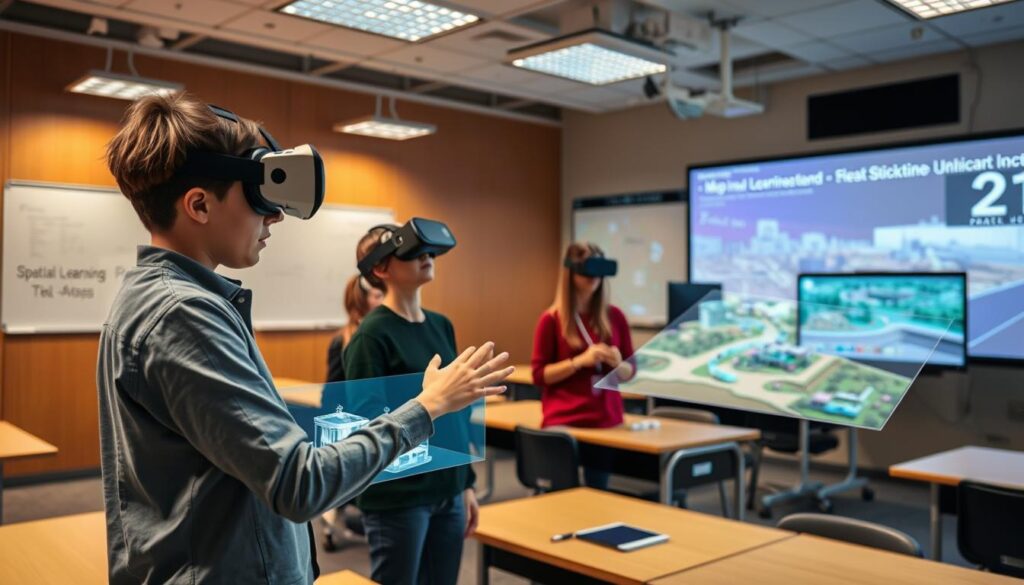
By adopting a nuanced assessment strategy, educators can maximize the benefits of AR/VR in education, ultimately enhancing student learning experiences.
The Future of Spatial Learning
The future of spatial learning is poised to revolutionize the way we educate and train individuals. As AR and VR technologies continue to advance, we can expect to see even more sophisticated immersive learning experiences. These will likely include enhanced immersive learning benefits such as increased student engagement and improved knowledge retention.
One area to watch is the development of skill simulation technology, which will enable learners to practice complex skills in a safe and controlled environment. This technology has the potential to transform industries such as healthcare, aviation, and manufacturing, where realistic training simulations are crucial.
As AR/VR Education becomes more mainstream, we can expect to see new business models and revenue streams emerge. Educational institutions and companies will need to adapt to these changes, investing in the development of high-quality, immersive content that meets the needs of learners.
Ultimately, the future of spatial learning holds much promise, with the potential to make education more accessible, effective, and enjoyable for learners around the world.