
Blog
Robotaxis on Demand: The State of Level 4 Autonomy and the Future of Urban Mobility**

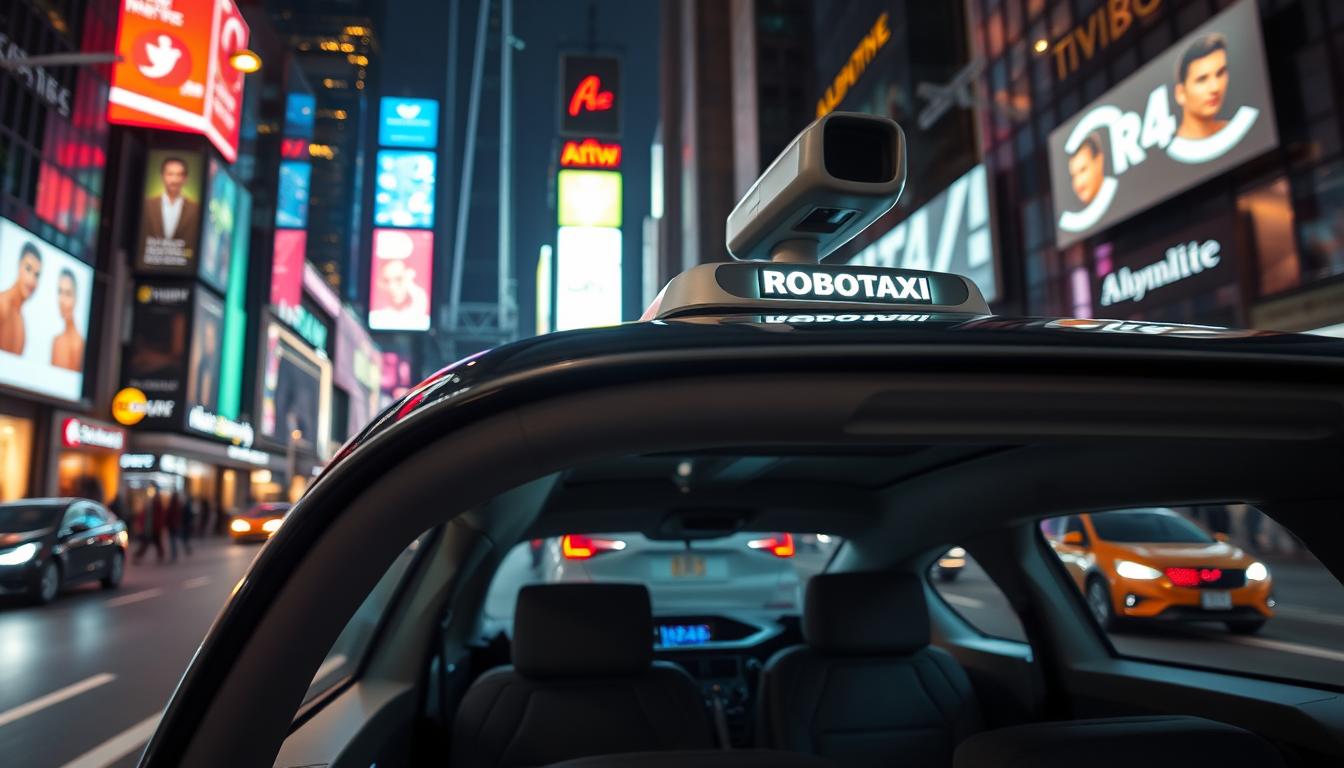
The rise of Autonomous Vehicles (AV) is transforming urban mobility, with robotaxis at the forefront of this revolution. Level 4 autonomous driving technology enables vehicles to operate independently in most conditions, paving the way for a future where transportation is safer, more efficient, and accessible.
As cities around the world grapple with congestion and pollution, robotaxis offer a promising solution. With the ability to navigate complex urban environments, these vehicles are poised to reduce traffic accidents and emissions, making our cities more livable.
Key Takeaways
- The development of Level 4 autonomy is crucial for the widespread adoption of robotaxis.
- Autonomous Vehicles are set to revolutionize urban mobility by enhancing safety and reducing congestion.
- The future of transportation is likely to be shaped by advancements in AV technology.
- Robotaxis will play a significant role in reducing urban pollution and improving air quality.
- The integration of robotaxis into urban transportation systems is expected to increase mobility for all citizens.
The Evolution of Autonomous Driving Technology
From basic driver assistance systems to fully autonomous vehicles, the evolution of autonomous driving technology has been remarkable. This progression has been marked by significant technological advancements and innovative milestones.
From Driver Assistance to Full Autonomy
The journey towards full autonomy began with the introduction of driver assistance systems, which have gradually evolved to enhance vehicle safety and convenience. Advanced Driver Assistance Systems (ADAS) have played a crucial role in this transition, laying the groundwork for more sophisticated autonomous technologies.
Key Milestones in AV Development
- Introduction of anti-lock braking systems (ABS)
- Development of electronic stability control (ESC)
- Implementation of lane departure warning systems
Early Pioneers and Breakthrough Moments
Pioneers in the field, such as Waymo and Tesla, have achieved significant breakthroughs, pushing the boundaries of autonomous driving technology.
The SAE Levels of Autonomy Explained
The SAE has defined six levels of driving automation, ranging from Level 0 (no automation) to Level 5 (full automation). Understanding these levels is crucial for grasping the current state of autonomous driving technology.
The Progression from Level 1 to Level 5
Vehicles have progressed from having basic driver assistance features at Level 1 to achieving high automation at Level 4, where vehicles can operate independently in most conditions.
Why Level 4 Represents a Critical Threshold
Level 4 autonomy represents a critical threshold because it signifies a vehicle’s ability to operate autonomously in most scenarios, marking a significant step towards fully autonomous driving.
Understanding Level 4 Autonomous Vehicles (AV)
Level 4 Autonomous Vehicles (AV) are characterized by their high automation capabilities, capable of handling most driving tasks without human intervention.
Defining Level 4 Autonomy
Level 4 autonomy represents a significant step in the development of Autonomous Vehicles (AV), offering high automation capabilities in specific conditions.
High Automation Capabilities
These vehicles can manage most driving scenarios autonomously, reducing the need for human input.
System Limitations and Fallbacks
Despite their advanced capabilities, Level 4 AVs still have limitations and require fallbacks, particularly in complex or unforeseen situations.
How Level 4 Differs from Level 3 and Level 5
Level 4 AVs differ significantly from Level 3, which requires human intervention in certain situations, and Level 5, which is fully autonomous under all conditions. For more information on the different levels of autonomy, visit this factsheet on Autonomous Vehicles.
| Level | Description | Human Intervention Required |
|---|---|---|
| Level 3 | Conditional Automation | Yes, in certain situations |
| Level 4 | High Automation | Rarely, in specific conditions |
| Level 5 | Full Automation | No |
Operational Design Domains (ODDs)
Operational Design Domains (ODDs) are critical for understanding the operational limits of Level 4 AVs.
Geofencing and Environmental Constraints
Geofencing restricts AV operation to specific geographic areas, while environmental constraints consider factors like weather and lighting.
Weather and Time-of-Day Limitations
Level 4 AVs may have limitations during adverse weather conditions or at night, affecting their operational efficiency.
Current State of Level 4 Autonomous Driving
The current landscape of Level 4 autonomous driving is characterized by rapid progress and innovation from key players. Several companies are making significant strides in this area, pushing the boundaries of what is possible with autonomous technology.
Leading Companies in the Level 4 Space
The development of Level 4 autonomous vehicles is being driven by a number of leading companies. These organizations are investing heavily in research and development, and are making significant progress in bringing this technology to market.
Waymo’s Technological Approach
Waymo is one of the pioneers in the Level 4 autonomous driving space. Their approach focuses on advanced sensor fusion and AI-driven decision-making. Waymo’s technology is designed to handle complex urban environments, making it a leader in the robotaxi services sector.
Cruise’s Urban Strategy
Cruise is another major player in the Level 4 autonomous driving space. Their strategy is centered around deploying robotaxis in urban areas, with a focus on safety and efficiency. Cruise’s technology is designed to navigate the complexities of city driving, providing a reliable and safe transportation solution.
Other Major Players and Their Progress
Other companies, such as Argo AI and Zoox, are also making significant progress in the Level 4 space. Argo AI is focusing on developing a robust autonomous driving system, while Zoox is working on creating a purpose-built robotaxi designed for urban environments.

Technological Breakthroughs Enabling Level 4
The advancement of Level 4 autonomous driving is being enabled by several key technological breakthroughs. These include advancements in sensor fusion and AI and machine learning.
Sensor Fusion Advancements
Sensor fusion is a critical component of Level 4 autonomous driving. Recent advancements in this area have enabled vehicles to better understand their surroundings, making them safer and more reliable.
AI and Machine Learning Developments
AI and machine learning are also playing a crucial role in the development of Level 4 autonomous vehicles. These technologies are enabling vehicles to make complex decisions in real-time, and to learn from their experiences.
Regulatory Progress and Challenges
The regulatory landscape for Level 4 autonomous driving is complex and evolving. While there have been significant advancements in some areas, there are still many challenges to be addressed.
State-by-State Regulatory Landscape in the US
In the United States, the regulatory landscape for autonomous vehicles varies from state to state. Some states, such as California and Arizona, have been at the forefront of autonomous vehicle regulation, while others are still in the process of developing their own regulations.
Federal Guidelines and Future Direction
The federal government is also playing a role in shaping the regulatory landscape for autonomous vehicles. Recent guidelines have been issued to help standardize regulations across the country, and to provide clarity for companies developing autonomous technology.
Robotaxi Services: The First Commercial Application
Robotaxi services are revolutionizing urban mobility with the first commercial application of Level 4 autonomy. These services are not only changing how people move around cities but also paving the way for the widespread adoption of autonomous vehicles.
Operational Robotaxi Services in the United States
The United States is at the forefront of deploying robotaxi services, with several companies leading the charge.
Waymo One in Phoenix and San Francisco
Waymo One, operated by Alphabet Inc., has been a pioneer in robotaxi services. With operations in Phoenix and San Francisco, Waymo One has provided thousands of rides, offering a glimpse into the future of transportation.
Cruise in San Francisco
Cruise, backed by General Motors, has also launched its robotaxi service in San Francisco. The service has garnered significant attention, with many users praising the convenience and safety of autonomous rides.
Other Emerging Services
Other companies, such as Zoox and Argo AI, are also entering the robotaxi market, further expanding the availability of autonomous ride services.
Business Models and Pricing Structures
The business models and pricing structures of robotaxi services are crucial to their long-term viability.
| Company | Pricing Model | Key Features |
|---|---|---|
| Waymo One | Per-mile pricing | Dynamic pricing based on demand |
| Cruise | Flat rate per ride | Discounts for frequent users |
Comparison with Traditional Rideshare Economics
Robotaxi services are competing directly with traditional rideshare companies. While their pricing models differ, both are vying for customer loyalty and retention.
Path to Profitability
Achieving profitability is a key challenge for robotaxi services. Companies must balance pricing with operational costs, including maintenance and regulatory compliance.
User Experience and Public Reception
The success of robotaxi services hinges on user experience and public reception. Feedback from riders is overwhelmingly positive, with many praising the safety and convenience of autonomous vehicles.
Companies are closely monitoring rider feedback and satisfaction metrics to identify areas for improvement.
Common Concerns and How Companies Address Them
Addressing concerns around safety and reliability is crucial. Companies are implementing various measures, including regular maintenance checks and robust safety protocols.
Self-Driving Car Safety: Myths vs. Reality
With the rise of robotaxis, understanding the safety implications of autonomous driving is more crucial than ever. As autonomous vehicles (AVs) become a common sight on our roads, it’s essential to separate the myths from the reality regarding their safety.
Safety Records of Current Robotaxi Deployments
The safety record of current robotaxi deployments is a critical area of study. By examining accident statistics and incident reports, we can gain a clearer understanding of how safe these vehicles truly are.
Accident Statistics and Incident Reports
Recent studies have shown that robotaxis have been involved in a relatively low number of accidents compared to human-driven vehicles. For instance, a report by the National Highway Traffic Safety Administration (NHTSA) found that AVs were involved in fewer crashes per mile traveled than traditional vehicles.
Types of Incidents and Root Causes
Analysis of incidents involving robotaxis reveals that most are caused by human error in other vehicles or unforeseen circumstances. The root causes often include factors like other drivers’ behavior, road conditions, and software or hardware malfunctions in the AVs.
Comparison with Human Drivers
Comparing the safety of AVs to human-driven vehicles is crucial. The data indicates that AVs have several statistical safety advantages over human drivers.
Statistical Safety Advantages
AVs are not susceptible to human errors such as distracted driving, speeding, or driving under the influence. Studies have shown that AVs can reduce the number of accidents on the road significantly.
Scenarios Where AVs Outperform Humans
In scenarios requiring quick reflexes or the ability to process multiple sources of information simultaneously, AVs often outperform human drivers. This includes complex intersections or emergency situations.
Safety Mechanisms and Redundancies
The safety of AVs is further enhanced by multiple redundancies in both hardware and software.
Hardware Redundancies
AVs are equipped with redundant hardware components such as duplicate sensors and power systems to ensure continued safe operation in case of component failure.
Software Failsafes and Remote Assistance
Advanced software failsafes and the ability for remote assistance allow for real-time monitoring and intervention if necessary, adding an additional layer of safety.
In conclusion, the safety of self-driving cars is supported by their robust safety records, statistical advantages over human drivers, and multiple safety mechanisms. As the technology continues to evolve, we can expect these vehicles to become even safer.
AV Infrastructure Needs for Widespread Adoption
The widespread adoption of autonomous vehicles (AVs) hinges on the development of robust infrastructure to support their operation. As AVs become more prevalent, it’s essential to understand the infrastructure requirements that will enable their seamless integration into our transportation systems.
Physical Infrastructure Requirements
Physical infrastructure plays a critical role in supporting AVs. This includes:
Road Markings and Signage
Clear and consistent road markings and signage are vital for AV navigation. High-visibility lane markings and standardized signage help AVs understand and respond to their environment.
Dedicated AV Lanes and Zones
The implementation of dedicated AV lanes and zones can enhance safety and efficiency. These designated areas allow AVs to operate under optimal conditions, reducing the risk of accidents and improving traffic flow.
Digital Infrastructure and Connectivity
Digital infrastructure is equally crucial for AV operation. Key components include:
5G and V2X Communication Systems
5G networks provide the high-speed, low-latency connectivity necessary for AVs to communicate with each other and their surroundings. V2X (Vehicle-to-Everything) communication systems enable AVs to exchange critical information, enhancing safety and efficiency.
High-Definition Mapping Requirements
High-definition (HD) mapping is essential for AV navigation, providing detailed information about the environment. These maps must be constantly updated to reflect changes in the infrastructure.

Charging and Maintenance Facilities
As AVs become more common, the need for specialized charging and maintenance facilities grows. This includes:
Specialized Service Centers
Specialized service centers will be necessary for the maintenance and repair of AVs, ensuring they remain in optimal condition.
Autonomous Charging Solutions
Autonomous charging solutions enable AVs to recharge without human intervention, enhancing their operational efficiency.
| Infrastructure Component | Description | Benefits |
|---|---|---|
| Road Markings and Signage | Clear and consistent markings and signs | Improved navigation for AVs |
| Dedicated AV Lanes | Designated lanes for AVs | Enhanced safety and efficiency |
| 5G and V2X Communication | High-speed, low-latency connectivity | Improved safety through real-time communication |
Commercial Autonomous Fleets: Beyond Passenger Transport
Beyond passenger transport, Level 4 autonomous vehicles are being integrated into diverse commercial applications, transforming industries and revolutionizing the way goods and services are delivered.
Autonomous Delivery Services
Autonomous delivery services are at the forefront of commercial autonomous fleet applications. These services are being tailored to meet the demands of a rapidly changing market.
Last-Mile Delivery Applications
Last-mile delivery is one of the most significant challenges in logistics. Autonomous vehicles are being deployed to tackle this issue, offering efficient and cost-effective solutions. Companies are leveraging Level 4 autonomy to navigate complex urban environments, ensuring timely delivery of packages.
Grocery and Food Delivery Innovations
The grocery and food delivery sector is also benefiting from autonomous technology. Innovative companies are using autonomous fleets to deliver groceries and meals, enhancing customer convenience and reducing operational costs.
Specialized Industry Applications
Beyond delivery services, autonomous fleets are being adopted in various specialized industries, showcasing their versatility and potential.
Logistics and Trucking
The logistics and trucking industry is experiencing a significant shift with the integration of autonomous vehicles. These vehicles are being used for long-haul trucking, improving efficiency and safety on the roads.
Campus and Airport Transportation
Autonomous vehicles are also being utilized for transportation within campuses and airports, providing seamless and efficient mobility solutions for passengers and employees.
Fleet Management Challenges and Solutions
Managing autonomous fleets comes with its own set of challenges. However, innovative solutions are being developed to address these issues.
Remote Monitoring Systems
Remote monitoring systems are crucial for the effective management of autonomous fleets. These systems enable real-time tracking and monitoring, ensuring that vehicles operate smoothly and efficiently.
Predictive Maintenance Approaches
Predictive maintenance is another key aspect of fleet management. By leveraging data analytics and AI, companies can predict potential maintenance issues, reducing downtime and improving overall fleet performance.
Economic and Social Impacts of Robotaxis
The economic and social implications of robotaxis are multifaceted, touching on various aspects of modern life. As we delve into these impacts, it becomes clear that the integration of Autonomous Vehicles (AV) into our transportation systems will have far-reaching consequences.
Job Market Disruption and Creation
The introduction of robotaxis will undoubtedly disrupt certain job markets, particularly those involving driving professions. However, this disruption is also accompanied by the creation of new job categories.
Affected Professions and Transition Strategies
Professions such as taxi drivers and truck drivers may see a decline in demand. To mitigate this, transition strategies focusing on retraining and upskilling will be crucial. For instance, drivers could transition into roles related to AV maintenance and operation.
New Job Categories Emerging from AV Technology
The rise of AV technology is expected to create new job opportunities in fields such as AV software development, data analysis, and fleet management. These roles will require specialized skills but offer a promising career path for those willing to adapt.
Accessibility Benefits for Underserved Populations
Robotaxis will significantly enhance mobility for underserved populations, including the elderly and disabled. By providing reliable and accessible transportation, robotaxis can help bridge the mobility gap.
Mobility Solutions for the Elderly and Disabled
For the elderly and disabled, robotaxis offer a safe and convenient transportation solution. This can lead to improved quality of life and increased independence.
Addressing Transportation Deserts
Robotaxi services can also address the issue of transportation deserts by providing coverage in areas where traditional public transport is lacking. This can have a positive impact on local economies and community connectivity.
Changes in Urban Planning and Real Estate
The advent of robotaxis will likely influence urban planning and real estate development. With the potential for reduced parking needs, cities may repurpose land for other uses.
Parking Infrastructure Repurposing
As the need for parking decreases, cities can convert parking lots into green spaces, residential areas, or commercial developments, enhancing urban livability.
New Models of Urban Development
The integration of robotaxis into urban mobility systems may also lead to new models of urban development, focusing on more efficient and sustainable transportation networks.
In conclusion, the economic and social impacts of robotaxis are complex and multifaceted. While there are challenges to be addressed, the potential benefits in terms of job creation, accessibility, and urban planning are significant.
Challenges on the Road to Level 4 Adoption
The journey to Level 4 autonomy is complex, involving numerous technical, legal, and societal obstacles. As autonomous vehicles (AVs) become more prevalent, addressing these challenges is crucial for their successful integration into our transportation systems.
Technical Hurdles Remaining
Despite significant advancements, technical challenges persist. One of the primary concerns is handling edge cases and unpredictable scenarios.
Edge Cases and Unpredictable Scenarios
AVs must be able to navigate complex and unforeseen situations, such as construction zones or unexpected pedestrian behavior. Developing algorithms that can handle these edge cases is a significant technical hurdle.
Sensor Limitations in Adverse Conditions
AVs rely on a suite of sensors, including cameras, lidar, and radar. However, these sensors can be affected by adverse weather conditions, such as heavy rain or fog, which can impact their performance and reliability.
Public Trust and Acceptance
Gaining public trust is essential for the widespread adoption of Level 4 autonomous vehicles. This involves overcoming the adoption curve and implementing education and familiarity strategies.
Overcoming the Adoption Curve
The adoption of new technology often follows an adoption curve, with early adopters being more receptive to new ideas. Strategies to overcome this curve include public awareness campaigns and offering test drives to potential users.
Education and Familiarity Strategies
Educating the public about the benefits and limitations of AVs can help build trust. This can be achieved through various channels, including social media, public events, and collaborations with influencers.
Legal and Liability Frameworks
Establishing clear legal and liability frameworks is critical for the adoption of Level 4 autonomy. This includes developing insurance models for autonomous vehicles and determining responsibility in accidents.
Insurance Models for Autonomous Vehicles
Traditional insurance models may not be applicable to AVs, as the liability shifts from the driver to the manufacturer or technology provider. New insurance models are being developed to address this shift.
Determining Responsibility in Accidents
In the event of an accident involving an AV, determining responsibility can be complex. Clear regulations are needed to establish liability and ensure that responsibility is assigned fairly.
Cybersecurity Concerns
Cybersecurity is a significant concern for AVs, as they rely on complex software and connectivity. Potential attack vectors include hacking into vehicle systems or exploiting vulnerabilities in the communication infrastructure.
Potential Attack Vectors
AVs are vulnerable to various cyber threats, including hacking and data breaches. Ensuring the security of these systems is crucial to prevent potential attacks.
Security Measures and Standards
Implementing robust security measures and standards is essential to mitigate cybersecurity risks. This includes encryption, secure communication protocols, and regular software updates.
| Challenge | Description | Potential Solution |
|---|---|---|
| Technical Hurdles | Handling edge cases and sensor limitations | Advanced algorithms and sensor fusion |
| Public Trust | Gaining acceptance and trust | Public awareness campaigns and education |
| Legal Frameworks | Establishing liability and insurance models | Clear regulations and new insurance models |
| Cybersecurity | Protecting against cyber threats | Robust security measures and standards |
The Future of Urban Mobility
As Autonomous Vehicles (AV) continue to advance, the prospect of Level 4 autonomous driving transforming urban mobility becomes increasingly tangible. With companies like Tesla and Waymo at the forefront, the potential for robotaxis to revolutionize transportation is vast.
Level 4 autonomy promises to make driving safer and more efficient by handling complex tasks and reducing human error. As AI-powered navigation systems predict traffic patterns and optimize routes in real-time, the benefits of Autonomous Vehicles will continue to grow.
The future of urban mobility is expected to be safer, more efficient, and more accessible. With the integration of Level 4 autonomous driving, cities can look forward to reduced congestion, lower emissions, and improved transportation networks.
As we move towards a future dominated by Autonomous Vehicles, it’s clear that the impact on urban mobility will be significant. By embracing this technology, we can create a more sustainable, efficient, and connected transportation system.