
Blog
Quantum Leap: What Quantum Computing Is, and When It Will Disrupt Everyday Life

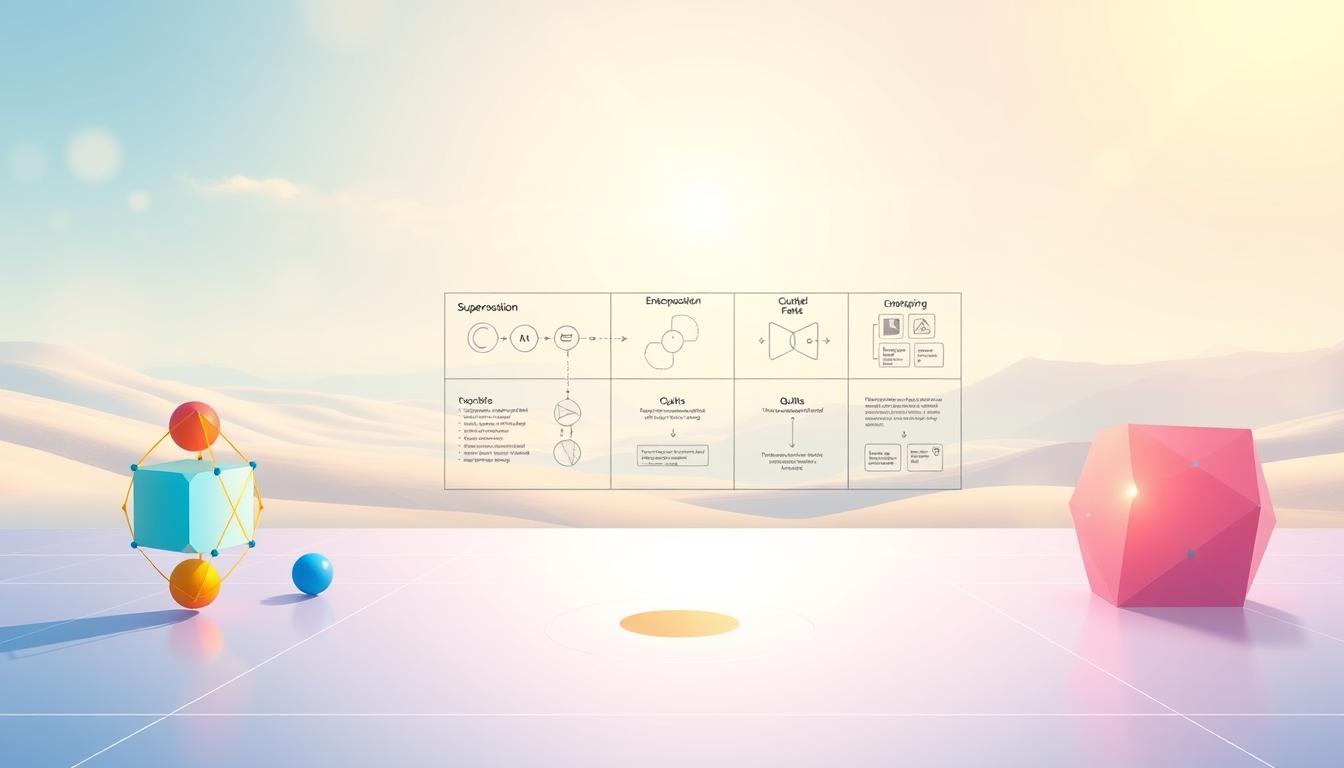
Imagine a world where complex problems are solved in seconds, and innovations transform industries overnight. This is the promise of quantum computing, a revolutionary technology that’s poised to disrupt everyday life as we know it. With its ability to process vast amounts of data exponentially faster than classical computers, quantum computing is evolving from experimental to essential, driven by breakthroughs like Google’s Willow quantum chip and recent advancements in the field.
As quantum computing becomes more accessible, its potential to impact various sectors, from cryptography to finance, is vast. The future of computing is not just about faster processing; it’s about solving problems that were previously unsolvable.
Key Takeaways
- Quantum computing has the potential to disrupt many existing solutions in computer science.
- Recent breakthroughs include Google’s Willow quantum chip and QuEra’s early fault-tolerant quantum computing.
- Advances in simulation techniques have accelerated quantum circuit computations significantly.
- Collaboration between academia and industry is crucial for the advancement of quantum computing.
- The technology can simulate complex molecules with atomic-level accuracy.
The Dawn of a Computing Revolution
As we stand on the brink of a quantum computing era, it’s essential to understand the paradigm shift it brings. Quantum computing represents a fundamental change in how we process information, moving beyond the limitations of classical computing.
From Classical to Quantum: A Paradigm Shift
Classical computers use bits to process information, which can only be in one of two states: 0 or 1. In contrast, quantum computers use qubits, which can exist in multiple states simultaneously due to the principles of superposition and entanglement. This allows quantum computers to process vast amounts of data much faster than their classical counterparts.
Why This Technology Matters Today
The significance of quantum computing lies in its potential real-world applications, from optimizing complex systems to revolutionizing fields like medicine and finance. Some key areas where quantum computing can make an impact include:
- Drug discovery and development
- Cryptography and cybersecurity
- Optimization of complex systems
- Advanced materials science
Understanding qubit technology and its advancements is crucial as we move towards a future where quantum computing becomes increasingly integrated into our daily lives.
What Is Quantum Computing? A Simple Explanation
Quantum computing represents a fundamental shift in how we process information, moving beyond the limitations of classical computers. Unlike traditional computers that use bits to store and process information, quantum computers use quantum bits or qubits.
To understand the difference, let’s explore the fundamental distinctions between classical and quantum computing.
Classical vs. Quantum: The Fundamental Differences
Classical computers use bits that can only be in one of two states: 0 or 1. Quantum computers, on the other hand, use qubits that can exist in multiple states simultaneously, thanks to the principle of superposition.
The Power of Superposition and Entanglement
Superposition allows a qubit to be both 0 and 1 at the same time, enabling quantum computers to process a vast number of possibilities simultaneously. Entanglement is another quantum phenomenon where qubits become interconnected, allowing the state of one qubit to affect the state of another, even when separated by large distances.
Why Quantum Computers Aren’t Just “Faster” Computers
Quantum computers aren’t just faster than classical computers; they’re different in kind. They can solve certain problems that are currently intractable, such as factoring large numbers (relevant to quantum encryption) and simulating complex quantum systems.
| Feature | Classical Computing | Quantum Computing |
|---|---|---|
| Basic Unit | Bit (0 or 1) | Qubit (Superposition of 0 and 1) |
| Processing | Sequential | Parallel (thanks to superposition) |
| Encryption Impact | Limited by current encryption methods | Can break some current encryption, enables quantum encryption |
Understanding quantum computing is crucial as it has the potential to revolutionize fields from cryptography to drug discovery. By explaining quantum computing simply, we can appreciate its potential to transform our technological landscape.
The Building Blocks: Qubit Technology Explained
At the heart of quantum computing lies a revolutionary component known as the qubit. Qubits are the fundamental units of quantum information, and they differ significantly from classical bits used in traditional computing.
How Qubits Differ from Traditional Bits
Unlike classical bits, which can only be in a 0 or 1 state, qubits can exist in multiple states simultaneously due to a property known as superposition. This ability, combined with entanglement, allows qubits to process vast amounts of information in parallel, making quantum computers potentially much more powerful than their classical counterparts for certain tasks.
Current Qubit Technologies
Several approaches are being explored to develop reliable qubit technology. These include:
Superconducting Qubits
These qubits are based on superconducting circuits and are currently one of the most advanced and widely used qubit technologies.
Trapped Ion Qubits
This technology involves trapping ions using electromagnetic fields and manipulating their quantum states to perform computations.
Photonic Qubits
Photonic qubits use particles of light (photons) to encode quantum information, offering potential advantages in terms of scalability and communication.
Each of these qubit technologies has its own set of challenges and advantages, and ongoing research is aimed at improving their coherence times, scalability, and operational fidelity.
The Current State of Quantum Computing
As we dive into the current state of quantum computing, it’s clear that we’re on the cusp of a revolution. The field is rapidly advancing, with numerous breakthroughs and innovations emerging from both established tech giants and innovative startups.
Major Players in the Quantum Race
The quantum computing landscape is dominated by key players such as IBM, Google, and Microsoft, who are at the forefront of developing quantum hardware and software. For instance, IBM has made significant strides in quantum computing, with its quantum initiatives gaining international recognition.
Recent Breakthroughs and Milestones
Recent years have seen several significant milestones in quantum computing. Some of the notable achievements include:
- Advancements in qubit stability and coherence times
- Breakthroughs in quantum error correction
- Successful demonstrations of quantum supremacy
Quantum Computers You Can Access Today
One of the most exciting developments in quantum computing is the increasing accessibility of quantum computers. For example, IBM offers cloud-based quantum computing services, allowing researchers and developers to experiment with real quantum hardware. Other companies, such as Rigetti Computing and IonQ, also provide access to quantum computers through cloud services.

The current state of quantum computing is characterized by rapid progress, intense competition, and increasing accessibility. As the technology continues to evolve, we can expect to see significant advancements in various fields, from medicine to finance.
Quantum Supremacy: Achievement and Controversy
Quantum supremacy, a term that has sparked both excitement and debate, represents a significant milestone in the journey towards practical quantum computing. It refers to the point at which a quantum computer can perform a calculation that is beyond the capabilities of a classical computer.
Google’s 2019 Quantum Supremacy Claim
In 2019, Google announced that it had achieved quantum supremacy using its 53-qubit Sycamore processor. The task involved sampling the output of a random quantum circuit, which Google claimed took 200 seconds to complete, compared to the 10,000 years it would take the world’s fastest supercomputer at the time.
IBM’s Perspective and Counter-Arguments
However, IBM countered Google’s claim, arguing that the task could be performed by a classical supercomputer in 2.5 days with improved algorithms and hardware. This sparked a debate on what constitutes true quantum supremacy and whether it is merely a marketing term.
What Constitutes True Quantum Advantage
The discussion around quantum supremacy highlights the need to define “quantum advantage” more clearly. A key aspect is not just performing a task faster but doing so in a way that provides practical benefits.
| Company | Claim | Counter-Claim |
|---|---|---|
| Achieved quantum supremacy in 200 seconds | IBM: Can be done in 2.5 days by a classical supercomputer |
Roadblocks on the Quantum Highway
Several significant obstacles stand between the current state of quantum computing and its widespread adoption. While the potential of quantum computing is vast, addressing these challenges is crucial for its advancement.
Quantum Decoherence and Error Correction
One of the primary challenges in quantum computing is quantum decoherence, which refers to the loss of quantum coherence due to interactions with the environment. This leads to errors in quantum computations. Developing robust methods for error correction is essential to mitigate this issue.
Scaling Issues and Hardware Limitations
Currently, most quantum computers are small-scale and need to be scaled up to perform complex tasks. Scaling quantum systems while maintaining control over qubits is a significant technological challenge. The main issues include:
- Maintaining qubit coherence over longer periods
- Improving qubit connectivity and reducing noise
- Developing more efficient quantum algorithms
The Talent Gap in Quantum Research
The field of quantum computing suffers from a talent gap, with a shortage of skilled researchers and engineers who can develop and apply quantum algorithms. Bridging this gap requires investment in education and training programs that can prepare the next generation of quantum scientists.
In conclusion, while quantum computing holds great promise, overcoming the challenges of quantum decoherence, scaling, and the talent gap is crucial for its success. Addressing these issues will pave the way for the widespread adoption of quantum technology.
Real-World Applications of Quantum Computing
As quantum computing technology advances, its practical applications are beginning to emerge across multiple fields. This revolutionary computing paradigm is poised to transform industries by solving complex problems that were previously unsolvable.
Revolutionizing Drug Discovery and Healthcare
Quantum computing can significantly accelerate drug discovery by simulating complex molecular interactions. This capability can lead to the development of new medicines and personalized treatment plans.
Transforming Financial Modeling and Risk Assessment
In finance, quantum computers can analyze vast datasets to optimize investment portfolios and predict market fluctuations more accurately. This can lead to better risk management and investment strategies.
Supercharging Artificial Intelligence
Quantum computing can enhance AI by speeding up machine learning algorithms, enabling more complex models, and improving data analysis. This synergy can lead to breakthroughs in areas like natural language processing and image recognition.
Accelerating Materials Science and Chemistry
Quantum simulations can help discover new materials with unique properties, such as superconductors or nanomaterials. This can drive innovation in electronics, energy storage, and other fields.
| Industry | Quantum Computing Application | Potential Impact |
|---|---|---|
| Healthcare | Drug discovery simulation | New medicines, personalized treatment |
| Finance | Portfolio optimization, risk analysis | Better investment strategies, risk management |
| AI | Machine learning acceleration | Advanced AI models, improved data analysis |
| Materials Science | Simulation of new materials | Innovation in electronics, energy storage |
The real-world applications of quantum computing are vast and varied, promising to transform numerous sectors. As this technology continues to evolve, we can expect to see significant advancements in multiple industries.
Quantum Encryption: Cybersecurity’s Next Frontier
The advent of quantum computing has brought quantum encryption to the forefront of cybersecurity discussions. As quantum computers become more powerful, they pose a significant threat to current encryption methods, but they also enable new, potentially unbreakable forms of encryption.
How Quantum Computers Threaten Current Encryption
Current encryption methods rely on complex mathematical problems that are difficult for classical computers to solve. However, quantum computers can process certain calculations much faster, potentially breaking these encryption methods. For instance, Shor’s algorithm can factor large numbers exponentially faster than any known classical algorithm, threatening RSA and elliptic curve cryptography.
Quantum Key Distribution Explained
Quantum Key Distribution (QKD) is a method of secure communication that uses quantum mechanics to encode and decode messages. QKD allows two parties to produce a shared random secret key known only to them, which can then be used to encrypt and decrypt messages.
Post-Quantum Cryptography Solutions
To address the threats posed by quantum computers, researchers are developing post-quantum cryptography solutions. These include cryptographic algorithms that are resistant to quantum attacks, such as lattice-based cryptography and hash-based signatures.
| Cryptography Type | Quantum Resistance | Current Status |
|---|---|---|
| RSA | Vulnerable | Widely used |
| Lattice-based | Resistant | Under development |
| Hash-based | Resistant | Experimental |
As quantum computing continues to evolve, the development and implementation of quantum encryption and post-quantum cryptography solutions will be crucial for maintaining cybersecurity.
When Will Quantum Computing Impact Your Daily Life?
With quantum computing slowly making its way from research labs to real-world applications, we’re left wondering when we’ll start noticing its effects in our everyday routines.
The impact of quantum computing on our daily lives will be gradual, unfolding over several years. Let’s break down what we can expect in the near term, medium term, and long term.
Near-Term Impacts (Next 5 Years)
In the next five years, we can expect to see the beginnings of quantum computing’s influence in specialized fields. Some of the near-term impacts include:
- Advancements in drug discovery: Quantum computers will start to make a mark in pharmaceutical research by simulating complex molecular interactions more accurately than classical computers.
- Enhanced optimization: Companies will leverage quantum computing to solve complex optimization problems, potentially leading to breakthroughs in logistics, finance, and energy management.
- Early adoption in cloud services: Cloud-based quantum computing services will become more prevalent, allowing researchers and developers to experiment with quantum algorithms.
Medium-Term Changes (5-10 Years)
As we move into the 5-10 year timeframe, we can anticipate more widespread adoption of quantum technologies. Some potential medium-term changes include:
- Increased use in materials science: Quantum simulations will help discover new materials with unique properties, potentially revolutionizing industries like electronics and construction.
- Quantum-enhanced AI: The integration of quantum computing with artificial intelligence could lead to more sophisticated AI models capable of tackling complex problems.
Long-Term Transformation (10+ Years)
Looking ahead to the long term, we can envision a future where quantum computing has become an integral part of our daily lives. Some potential long-term transformations include:
- Ubiquitous quantum computing: Quantum computers could become as common as smartphones, transforming how we interact with technology.
- New forms of encryption: Quantum-resistant cryptography will become the norm, ensuring that our digital communications remain secure in a post-quantum world.
The Growing Quantum Computing Ecosystem
The quantum computing landscape is rapidly evolving, with new developments emerging at an unprecedented pace. This growth is not limited to the hardware itself but extends to the entire ecosystem surrounding it, including cloud-based services, programming languages, development tools, and educational resources.
Cloud-Based Quantum Services
Cloud-based quantum services are making it easier for researchers and developers to access quantum computing resources without the need for expensive hardware. Companies like IBM, Google, and Microsoft are offering cloud-based quantum computing platforms that allow users to run quantum algorithms and experiments remotely.
Quantum Programming Languages and Development Tools
The development of quantum programming languages and tools is crucial for the growth of the quantum ecosystem. Languages like Q# and Qiskit are being used to develop quantum algorithms, while tools like quantum debuggers and simulators are helping developers test and refine their code.
Educational Resources and Career Opportunities
As the demand for quantum computing expertise grows, so too does the availability of educational resources. Universities are offering courses in quantum computing, and online platforms are providing tutorials and certification programs. This is creating new career opportunities for those with the skills to develop and apply quantum technology.
| Company | Cloud Service | Programming Language |
|---|---|---|
| IBM | IBM Quantum | Qiskit |
| Google Quantum AI | OpenFermion | |
| Microsoft | Azure Quantum | Q# |
Ethical and Societal Implications of Quantum Technology
With the rise of quantum computing, we must confront the potential consequences on our privacy, economy, and national security. As quantum computers become more powerful, they pose a significant threat to our current encryption methods, potentially compromising the security of online transactions and communication.
Privacy in a Post-Quantum World
The advent of quantum computing necessitates a shift towards quantum encryption methods that can withstand the power of quantum computers. This includes exploring new cryptographic techniques and protocols that are resistant to quantum attacks.
Economic Disruption and Job Market Evolution
Quantum computing is expected to bring about significant economic disruption, potentially automating jobs that are currently performed by classical computers. This could lead to job displacement, but it also creates opportunities for new industries and job roles that we cannot yet anticipate.
Global Competition and National Security Concerns
The race for quantum supremacy is not just about technological advancement; it also has significant implications for national security. Countries with advanced quantum capabilities may have a strategic advantage over others, potentially altering the global balance of power.
Preparing for the Quantum Future
As we’ve explored throughout this article, quantum computing is poised to revolutionize numerous aspects of our lives, from healthcare and finance to materials science and cybersecurity. At the heart of this revolution is qubit technology, which enables quantum computers to process information in ways that classical computers cannot.
The journey to a quantum future is already underway, with major players like Google, IBM, and Microsoft making significant strides in qubit technology and quantum computing. As we move forward, it’s essential to stay informed about the developments in this field and understand how they might impact our daily lives.
By grasping the fundamentals of quantum computing and qubit technology, we can better prepare for the changes that are coming. Whether it’s through advancements in quantum encryption, improvements in drug discovery, or the development of new materials, the potential applications of quantum computing are vast and varied.