
Blog
Generative AI 2.0: Beyond ChatGPT, The Next Wave of Autonomous AI Content and Tools


The world of artificial intelligence is on the cusp of a revolution with the advent of Generative AI 2.0. This next-generation technology promises to take autonomous AI content creation to new heights, surpassing the capabilities of current AI models like ChatGPT.
Generative AI 2.0 represents a significant leap forward in AI technology, enabling more sophisticated and nuanced content generation. This advancement is poised to transform industries reliant on content creation.
Key Takeaways
- The emergence of Generative AI 2.0 marks a significant advancement in AI technology.
- This new wave of AI promises enhanced autonomous content creation capabilities.
- Industries reliant on content creation are poised to be transformed by this technology.
- Generative AI 2.0 is expected to surpass the capabilities of current AI models.
- The potential applications of Generative AI 2.0 are vast and varied.
The Current State of Generative AI and Its Limitations
The current generation of AI tools, including ChatGPT, has shown impressive capabilities but also significant limitations. As we explore the current state of generative AI, it’s essential to understand both its achievements and its constraints.
ChatGPT and First-Generation AI Tools
ChatGPT and similar first-generation AI tools have revolutionized the way we interact with technology, offering advanced language processing capabilities. However, these models are primarily reactive, responding to input based on their training data without true understanding or autonomy. For instance, while ChatGPT can generate human-like text, it doesn’t comprehend the context or the nuances of human communication.
Why We Need to Move Beyond Current Models
The limitations of current generative AI models necessitate the development of more advanced technologies. To move beyond these limitations, future AI systems need to be more autonomous, context-aware, and capable of multimodal integration. The table below highlights key differences between current and future generative AI models.
| Feature | Current Generative AI | Future Generative AI 2.0 |
|---|---|---|
| Autonomy | Reactive, input-based | Proactive, self-directed |
| Context Awareness | Limited to training data | Dynamic, real-time context |
| Multimodal Capabilities | Primarily text-based | Seamless integration of text, audio, video |
By advancing beyond the current limitations, we can unlock new possibilities for generative AI, paving the way for more sophisticated AI agents and innovative applications in various industries.
What Defines Generative AI 2.0: Core Characteristics
With the advent of Generative AI 2.0, the AI community is on the cusp of a new era marked by autonomy, context-awareness, and multimodal integration. This next generation of AI promises to overcome the limitations of its predecessors, offering more sophisticated and human-like capabilities.
Autonomy and Self-Direction
Generative AI 2.0 is characterized by its ability to operate with increased autonomy and self-direction. This means that AI systems can now perform complex tasks without the need for constant human oversight, making them more efficient and capable of handling intricate projects.
Context-Awareness and Memory
Another key feature is context-awareness and memory, allowing AI to understand and retain context over longer periods. This advancement enables more coherent and relevant AI-generated content, significantly improving the quality of AI content creation.
Multimodal Integration Capabilities
The integration of multimodal capabilities is a hallmark of Generative AI 2.0. By seamlessly combining text, audio, video, and other data types, AI can produce rich, engaging content that was previously unimaginable. This is particularly significant for applications in entertainment, education, and media, where multimodal AI can create immersive experiences.
Key Technological Breakthroughs Enabling the Next Wave
Advances in several key areas are enabling the development of Generative AI 2.0, transforming the landscape of artificial intelligence. These breakthroughs are crucial for overcoming the limitations of current AI models and unlocking new capabilities.
Advanced Neural Network Architectures
The development of more sophisticated neural network architectures is a significant factor in the evolution of Generative AI. These advanced models are capable of handling complex data sets and generating more accurate and diverse outputs. For more information on the latest developments in AI, visit key AI developments.
Computational Efficiency Innovations
Improvements in computational efficiency are making it possible to train larger and more complex AI models. This is achieved through innovations in hardware and software, such as specialized AI chips and more efficient algorithms. As a result, AI agents are becoming more powerful and capable of handling a wider range of tasks.
Synthetic Data and Transfer Learning
The use of synthetic data and transfer learning is another key breakthrough. Synthetic data helps in training AI models when real data is scarce, while transfer learning enables models to apply knowledge gained in one domain to another. This is particularly useful for Generative AI applications, where adaptability is crucial.
These technological advancements are collectively driving the next wave of Generative AI, enabling more sophisticated and capable AI systems.
Multimodal AI: Creating Across Text, Audio, Video and More
The development of multimodal AI capabilities is opening new avenues for creators to produce rich, diverse content. This advancement enables the generation of content across various media formats, including text, audio, and video, thereby revolutionizing the content creation landscape.
Seamless Cross-Modal Generation
One of the key features of multimodal AI is its ability to facilitate seamless cross-modal generation. This means that AI can generate content in one format based on input from another format.
Text-to-Everything Capabilities
Multimodal AI can convert text into other media formats, such as audio or video, enhancing the versatility of content creation.
Unified Understanding Frameworks
These frameworks allow AI to comprehend and integrate information from different modalities, ensuring a cohesive and context-aware output.
Real-time Multimodal Processing
The ability to process multiple forms of media in real-time is crucial for applications that require immediate content generation and adaptation.
Applications in Entertainment and Media
Multimodal AI is poised to transform the entertainment and media industries by enabling the creation of complex, engaging content. For instance, it can be used to generate personalized movie trailers or interactive stories
By leveraging multimodal AI, creators can push the boundaries of storytelling and content production, offering audiences richer and more immersive experiences.
AI Agents: From Reactive Assistants to Proactive Collaborators
As AI technology advances, AI agents are shifting from simple reactive assistants to sophisticated proactive collaborators. This evolution is transforming the way we interact with technology, enabling more efficient and effective task management.
Autonomous Task Planning and Execution
Modern AI agents are capable of autonomous task planning and execution, allowing them to take on complex responsibilities without human intervention. This is achieved through advanced algorithms that enable goal-oriented problem-solving.
Goal-Oriented Problem Solving
AI agents can now identify and prioritize tasks based on predefined goals, making them invaluable in environments where decision-making is critical. Efficient problem-solving is at the heart of this capability, allowing AI agents to navigate complex scenarios.
Learning from Feedback
Another crucial aspect of autonomous AI agents is their ability to learn from feedback. By adapting to outcomes of their actions, AI agents can refine their strategies, improving overall performance and reliability.
Multi-Agent Collaboration Systems
The development of multi-agent collaboration systems represents a significant leap forward in AI technology. These systems enable multiple AI agents to work together, sharing information and coordinating actions to achieve common objectives.
“The future of AI lies in its ability to collaborate, not just with humans, but with other AI systems, creating a symphony of intelligence that can tackle the most complex challenges.”
Human-AI Teamwork Models
Human-AI teamwork models are becoming increasingly important as AI agents transition into proactive collaborators. By integrating AI into human workflows, organizations can leverage the strengths of both humans and AI systems, enhancing productivity and innovation.
As AI agents continue to evolve, their role in proactive collaboration will become more pronounced, driving significant advancements in various industries.
Generative AI Trends for 2026: What’s on the Horizon
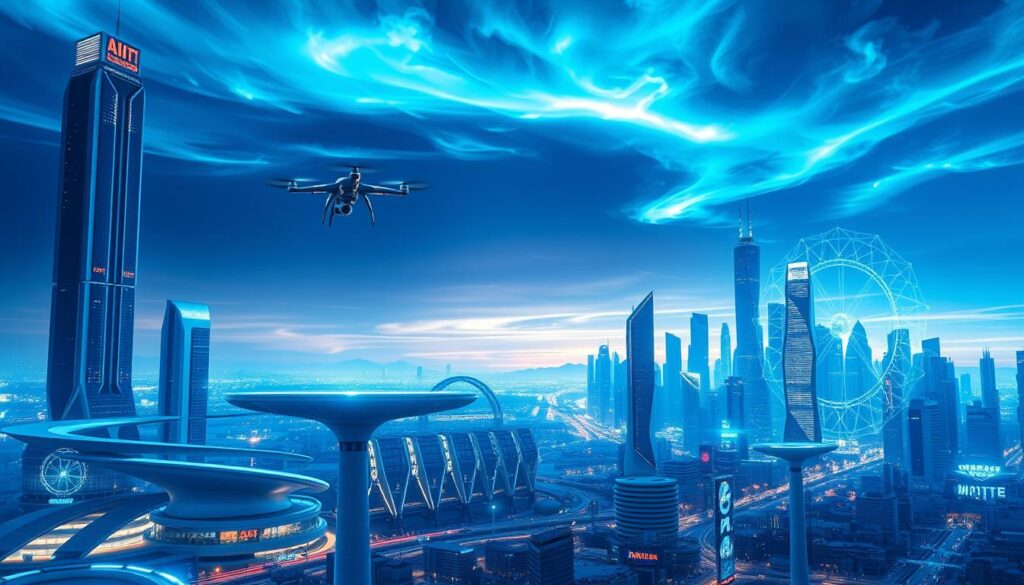
As we approach 2026, the landscape of Generative AI is poised for significant transformations. The next generation of AI technologies is expected to bring about unprecedented advancements in various sectors.
Industry-Specific AI Specialization
One of the key trends in Generative AI for 2026 is industry-specific AI specialization. As AI technology advances, we can expect to see more tailored solutions for different industries, such as healthcare, finance, and entertainment. This specialization will enable businesses to leverage AI more effectively, leading to improved efficiency and innovation.
For instance, in healthcare, AI can be used to generate personalized treatment plans, while in finance, it can help detect fraudulent transactions. The possibilities are vast, and industry-specific AI is set to revolutionize how businesses operate.
Ambient Intelligence in Everyday Environments
Another significant trend is the integration of ambient intelligence into everyday environments. Ambient intelligence refers to the ability of AI systems to be sensitive to and respond to the presence of people, creating a more seamless and intuitive user experience.
In 2026, we can expect to see ambient intelligence being used in various settings, from smart homes to public spaces. This will enable a more personalized and responsive environment, enhancing the overall quality of life.
Personal AI Ecosystems
The rise of personal AI ecosystems is another trend to watch out for in 2026. Personal AI ecosystems refer to the integration of multiple AI systems to create a personalized experience for individuals.
This can include AI-powered personal assistants, smart home devices, and other connected technologies. The goal is to create a coherent and integrated AI ecosystem that can adapt to an individual’s needs and preferences, making life easier and more convenient.
The Content Creation Revolution
The advent of Generative AI 2.0 is revolutionizing the content creation landscape, transforming how we produce, distribute, and consume content. This new wave of AI is not just about generating text or images; it’s about creating an entirely new ecosystem for content creation.
Creative Workflow Transformation
Generative AI 2.0 is transforming creative workflows by automating routine tasks, enhancing human creativity, and enabling new forms of content. With multimodal AI, creators can now work across different media formats seamlessly, from text to video and audio, streamlining the production process.
Personalization at Unprecedented Scale
One of the most significant impacts of Generative AI 2.0 is its ability to enable personalization at an unprecedented scale. By analyzing vast amounts of data, AI can tailor content to individual preferences, creating a more engaging user experience. This level of personalization was previously unimaginable due to the limitations of human creators and traditional AI systems.
New Economics of Digital Creation
The rise of AI-driven content creation is also changing the economics of digital creation. With the ability to produce high-quality content more efficiently, creators and businesses can reduce costs and increase output. This shift is likely to disrupt traditional models of content creation and distribution, opening up new opportunities for creators and consumers alike.
Enterprise Applications of Next-Generation Generative AI
Next-generation Generative AI is poised to revolutionize how businesses operate and innovate. This new wave of AI technology is not just about automating tasks; it’s about transforming entire business processes, enhancing customer experiences, and accelerating innovation.
Business Process Reinvention
Generative AI 2.0 is set to redefine business processes by introducing autonomy and self-direction. This means that routine tasks can be handled more efficiently, freeing up human resources for strategic and creative work. For instance, AI can automate data analysis, predict outcomes, and even suggest actions based on complex data sets.
| Process | Traditional Method | Generative AI 2.0 |
|---|---|---|
| Data Analysis | Manual analysis | Automated predictive analytics |
| Customer Service | Human operators | AI-driven chatbots |
| Innovation | Brainstorming sessions | AI-assisted idea generation |
Customer Experience Transformation
The next-generation Generative AI is also poised to transform customer experiences. By integrating multimodal capabilities, businesses can offer more personalized and engaging interactions. For example, AI can generate personalized content, such as product recommendations or tailored marketing messages, based on customer behavior and preferences.
Innovation Acceleration and R&D
Generative AI 2.0 is expected to accelerate innovation and R&D across industries. By automating certain aspects of research and development, AI can help scientists and engineers explore new ideas and solutions more efficiently. This can lead to breakthroughs in various fields, from healthcare to technology.
In conclusion, the enterprise applications of next-generation Generative AI are vast and varied, offering businesses the potential to reinvent processes, transform customer experiences, and accelerate innovation.
Challenges and Limitations in the Path to AI 2.0
The journey to AI 2.0 is fraught with technical, economic, and regulatory hurdles. As we advance towards more sophisticated AI systems, it’s crucial to address these challenges to ensure a smooth transition.

Technical Hurdles to Overcome
One of the primary challenges is improving the autonomy and self-direction of AI systems. Current AI models, like those used in virtual celebrities, are limited by their training data and lack the ability to truly understand context. Enhancing these capabilities requires significant advancements in neural network architectures and computational efficiency.
Economic and Workforce Disruption
The introduction of AI 2.0 will likely cause significant economic disruption, particularly in sectors where tasks are repetitive or can be easily automated. This could lead to job displacement and require a substantial shift in workforce training and education. Companies and governments must prepare for this eventuality by investing in programs that support workers in transitioning to new roles.
Governance and Regulatory Considerations
As AI becomes more pervasive, there’s a growing need for responsible AI use. This includes developing frameworks that ensure AI systems are transparent, fair, and accountable. Regulatory bodies must work closely with industry leaders to establish guidelines that promote innovation while protecting societal interests.
Responsible AI Use in an Autonomous Creation Era
As we step into the era of Generative AI 2.0, the importance of responsible AI use cannot be overstated. The development and deployment of autonomous AI content creation tools raise significant ethical considerations that must be addressed to ensure these technologies benefit society.
Ethical Frameworks for Development and Deployment
Developing ethical frameworks for AI is crucial. These frameworks should guide the development, deployment, and use of AI systems, ensuring they are aligned with human values and societal norms. Ethereum’s co-founder, Vitalik Buterin, emphasized the need for ‘techno-social’ systems that integrate technical and social components to address complex societal challenges.
“AI systems are only as good as the data they’re trained on and the objectives they’re designed to optimize. Ensuring they’re aligned with human values requires careful consideration of ethical frameworks.”
Transparency, Attribution, and Authenticity
Transparency, attribution, and authenticity are critical in the era of autonomous AI content creation. Ensuring that AI-generated content is clearly labeled and that the sources of information are transparent can help maintain trust in digital media.
| Key Aspect | Description | Benefit |
|---|---|---|
| Transparency | Clear labeling of AI-generated content | Builds trust in digital media |
| Attribution | Proper citation of sources used by AI | Promotes accountability |
| Authenticity | Verification of AI-generated content accuracy | Ensures reliability of information |
By focusing on these aspects, we can foster a more responsible and ethical AI ecosystem that supports the beneficial use of Generative AI trends 2026.
Conclusion: Preparing for the Generative AI Future
The future of Generative AI is rapidly unfolding, bringing with it significant advancements in AI content creation, multimodal AI, and AI agents. As we’ve explored throughout this article, the next wave of Generative AI 2.0 promises to revolutionize the way we create, interact with, and benefit from AI technologies.
To prepare for this future, it’s essential to understand the core characteristics of Generative AI 2.0, including autonomy, context-awareness, and multimodal integration capabilities. By embracing these advancements, we can unlock new possibilities for creative expression, business innovation, and societal progress.
As AI continues to evolve, it’s crucial to address the challenges and limitations associated with its development and deployment. By doing so, we can ensure that the benefits of Generative AI are realized while minimizing its risks.
Ultimately, the future of Generative AI is not just about technological advancements; it’s about creating a harmonious balance between human creativity and AI capabilities. By doing so, we can unlock the full potential of Generative AI and shape a brighter future for all.