
Blog
From Linear to Loop: The Business Models Driving the Circular Economy and Zero-Waste Innovation**

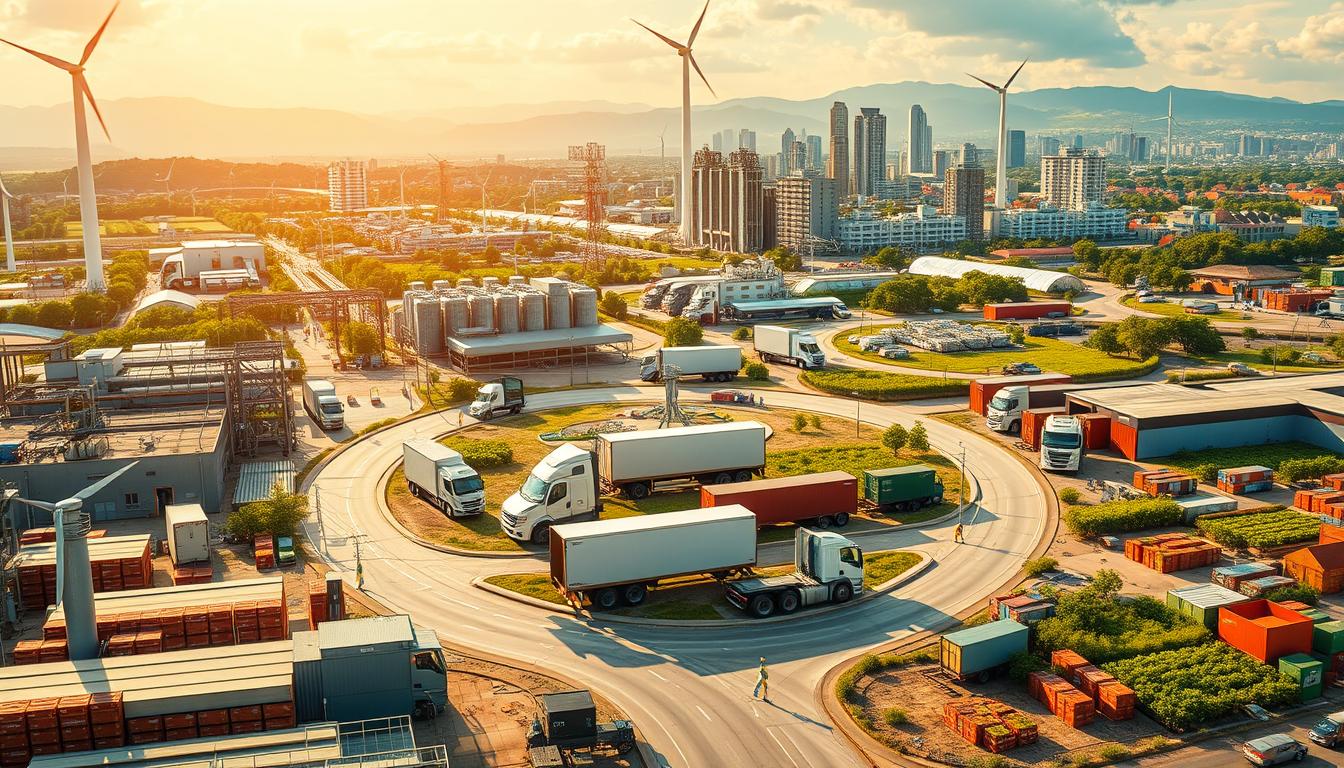
The traditional linear economy has long been the cornerstone of industrial production, but it’s slowly being replaced by a more sustainable approach. The shift towards a circular economy is gaining momentum, driven by businesses that are embracing innovative models to reduce waste and promote sustainability.
This transformation is not just about reducing environmental impact; it’s also about creating new opportunities for growth and development. Companies are now focusing on sustainable supply chains and adopting circular economy business models that benefit both the planet and their bottom line.
Key Takeaways
- Understanding the shift from linear to circular economy
- The role of business models in driving sustainability
- Importance of sustainable supply chains in reducing waste
- Innovative approaches to zero-waste innovation
- Benefits of adopting circular economy practices for businesses
The Problem with Linear Economics
Linear economics, characterized by a ‘take-make-dispose’ approach, has dominated global production and consumption patterns. This traditional model has driven economic growth but at a significant environmental cost.
Resource Depletion and Waste Generation
The linear economy is marked by resource depletion and waste generation. As natural resources become scarcer, the economic viability of this model is increasingly challenged.
Statistics on Global Waste Production
According to recent statistics, global waste production is staggering. For instance, the world generates over 2 billion tons of municipal solid waste annually, with this number expected to rise to 3.4 billion tons by 2050.
Critical Resource Scarcity
Critical resource scarcity is another pressing issue. Resources like rare earth minerals and clean water are becoming increasingly scarce, threatening the sustainability of the linear model.
Environmental Impact of “Take-Make-Dispose”
The environmental impact of the “take-make-dispose” approach is profound, leading to pollution, habitat destruction, and climate change
Economic Limitations of Linear Models
Economically, linear models are limited by their dependence on continuous growth and resource extraction. This makes them unsustainable in the long term, highlighting the need for alternative economic models like the circular economy.
The Circular Economy: A Paradigm Shift in Business
As the world grapples with environmental challenges, the circular economy emerges as a crucial paradigm shift in business practices. This economic model is designed to be restorative and regenerative by design, aiming to keep resources in use for as long as possible, extract the maximum value from them whilst in use, and recover and regenerate products and materials at the end of each service life.
Core Principles and Framework
The circular economy is built on several core principles, including designing out waste and pollution, keeping products and materials in use, and regenerating natural systems. Businesses are adopting circular economy business models that focus on long-term sustainability rather than short-term gains. This involves a shift from the traditional linear economy’s “take-make-dispose” approach to a more circular and regenerative model.
Economic and Environmental Benefits
The circular economy offers numerous economic and environmental benefits. By adopting circular economy principles, businesses can reduce costs and create new revenue streams. The environmental benefits are equally significant, with reduced waste and pollution contributing to a healthier planet.
Cost Savings and New Revenue Streams
By designing out waste and keeping products in use, businesses can achieve significant cost savings. Additionally, circular economy models can create new revenue streams through product-as-a-service offerings and recycling programs.
Reduced Environmental Footprint
The circular economy helps reduce the environmental footprint of businesses by minimizing waste and pollution. This not only benefits the environment but also enhances a company’s brand reputation and compliance with increasingly stringent environmental regulations.
Key Stakeholders in the Circular Transition
The transition to a circular economy involves various stakeholders, including businesses, governments, and consumers. Repairability laws and other regulatory frameworks are being implemented by governments to support this transition. Businesses are key players, as they need to redesign their products and services to fit circular economy models. Consumers also play a crucial role by demanding more sustainable products and services.
Product-as-a-Service: Shifting from Ownership to Access
Product-as-a-service models are revolutionizing the way companies approach product design, manufacturing, and customer engagement. This shift from ownership to access is driven by the need for more sustainable and flexible business models.
Subscription and Performance-Based Models
Subscription models allow customers to use products for a recurring fee, while performance-based models focus on the outcome or performance of the product. Both models incentivize manufacturers to produce high-quality, durable products.

Case Studies: Philips Lighting and Rolls-Royce
Companies like Philips Lighting and Rolls-Royce have successfully implemented product-as-a-service models. Philips offers lighting-as-a-service, where customers pay for the light they use, not the bulbs themselves. Rolls-Royce’s “Power-by-the-Hour” model charges customers based on the actual usage and performance of their jet engines.
Benefits and Implementation Challenges
The benefits of product-as-a-service include reduced waste, increased customer loyalty, and new revenue streams. However, businesses also face challenges such as customer adoption barriers and significant upfront investments.
Customer Adoption Barriers
Customers may be hesitant to adopt product-as-a-service models due to concerns about loss of control or dependency on the service provider. Educating customers about the benefits is crucial.
Financial Implications for Businesses
Implementing product-as-a-service models requires significant investment in product design, manufacturing, and service infrastructure. However, the long-term benefits can outweigh these costs.
| Company | Product-as-a-Service Model | Benefits |
|---|---|---|
| Philips Lighting | Lighting-as-a-Service | Reduced energy consumption, lower maintenance costs |
| Rolls-Royce | Power-by-the-Hour | Increased engine reliability, reduced maintenance costs |
Designing for Circularity: Products Built to Last
To achieve a truly circular economy, businesses must prioritize the design of durable, repairable products. This approach not only reduces waste but also fosters a culture of sustainability among consumers.
Modular Design and Repairability
One key strategy in designing for circularity is adopting modular design principles. This involves creating products with interchangeable components, making it easier to repair and upgrade them rather than replacing them entirely.
- Enhances product lifespan
- Reduces electronic waste
- Encourages consumer engagement in repair and maintenance
Material Selection and Durability
The choice of materials is crucial in determining the durability and recyclability of a product. Companies are increasingly opting for sustainable materials that are not only environmentally friendly but also durable.
For more information on how companies like Dell are implementing circular economy practices, visit Dell’s Circular Economy page.
Impact of Right-to-Repair Legislation
Right-to-repair legislation is gaining momentum worldwide, with many countries implementing laws that require manufacturers to make repair information and spare parts available to consumers.
Current and Pending Repairability Laws
Several countries have already enacted right-to-repair laws, with more pending. For instance, the European Union has introduced legislation to improve product repairability.
Corporate Responses to Regulatory Changes
Companies are responding to these regulatory changes by redesigning their products to be more repairable and by providing better support for consumers, including repair services and online resources.
Transforming Supply Chains for Sustainable Circularity
As businesses transition towards circular economy models, transforming supply chains is crucial for achieving sustainable circularity. This transformation involves adopting practices that not only reduce environmental impact but also ensure long-term economic viability.
Sustainable Sourcing and Procurement
Sustainable sourcing and procurement are foundational elements of a circular supply chain. Companies are increasingly looking for materials and products that are sourced responsibly, have a lower environmental footprint, and are designed to be recycled or reused. Implementing sustainable procurement practices can significantly reduce waste and support the development of new circular business models.
Transparent and Traceable Supply Networks
Transparency and traceability are critical for ensuring that supply chains operate with integrity and sustainability. Technologies like blockchain are being adopted to enhance supply chain visibility, enabling companies to track products from origin to end-user. This not only helps in managing risks but also in building trust with consumers.
Blockchain and Digital Tracking Solutions
Blockchain technology offers a secure and transparent way to record transactions and track products throughout the supply chain. By utilizing blockchain, companies can ensure that their supply chains are not only transparent but also resistant to fraud and errors. Digital tracking solutions further enhance this capability, providing real-time data on product movement and status.
Collaborative Supplier Engagement Models
Collaboration with suppliers is essential for driving circular economy practices throughout the supply chain. By engaging suppliers in the development of sustainable practices and circular business models, companies can foster innovation and ensure that their supply chains are aligned with their sustainability goals. Collaborative engagement models facilitate the sharing of best practices and can lead to mutually beneficial outcomes.
By transforming supply chains, businesses can not only reduce their environmental impact but also create new opportunities for growth and innovation. As the circular economy continues to evolve, the importance of sustainable, transparent, and collaborative supply chains will only continue to grow.
Reverse Logistics and Take-Back Systems
Effective reverse logistics and take-back systems are essential for product recovery, recycling, and the overall success of circular economy initiatives. These systems enable businesses to regain control over products at the end of their life cycle, reducing waste and the demand for new raw materials.
Infrastructure for Product Recovery
Developing the right infrastructure is critical for efficient product recovery. This includes establishing collection networks, refurbishment facilities, and recycling plants. Companies like HP and Dell have implemented take-back programs that include recycling and refurbishment, demonstrating the feasibility of closing the loop.
Incentivizing Consumer Participation
To ensure the success of reverse logistics, businesses must incentivize consumers to participate. Strategies include offering discounts on future purchases, rewards programs, and making the return process as simple as possible. For instance, Patagonia encourages customers to repair their products rather than discarding them, promoting a culture of sustainability.
Technology Enabling Efficient Returns
Technology plays a vital role in streamlining reverse logistics. Advanced software solutions can optimize return routes, manage inventory, and track products throughout their lifecycle. Technologies like RFID tagging and blockchain enhance transparency and efficiency in the returns process, making it easier for companies to adopt product-as-a-service models and reduce waste.
Waste Reduction Technologies Driving Zero-Waste Innovation
The pursuit of zero-waste innovation is gaining momentum, driven by cutting-edge waste reduction technologies. As the world grapples with the challenges of waste management and sustainability, these technologies are playing a crucial role in reducing waste and promoting a more circular economy.
Advanced Sorting and Material Recovery
One of the key areas where technology is making a significant impact is in advanced sorting and material recovery. AI and robotics are being increasingly used to improve the efficiency and accuracy of waste sorting processes.
AI and Robotics in Waste Management
AI-powered sorting systems can identify and separate different types of materials with high precision, increasing the quality of recyclables and reducing contamination rates. Robotics, on the other hand, are being used to automate the sorting process, reducing labor costs and improving safety. For more information on how these technologies are being implemented, you can explore simple eco-hacks to live greener in.
Chemical Recycling Breakthroughs
Chemical recycling is another area where significant breakthroughs are being made. This process involves breaking down waste materials into their chemical building blocks, which can then be used to produce new products. This technology has the potential to recycle a wider range of materials than traditional mechanical recycling methods.
Biological Processing Innovations
Biological processing innovations are also playing a crucial role in waste reduction. Anaerobic digestion and composting are being used to convert organic waste into valuable resources such as biogas and nutrient-rich compost.
Digital Solutions for Waste Prevention
Digital solutions are being developed to prevent waste before it occurs. Supply chain optimization tools are being used to reduce packaging waste, while product design software is enabling companies to design products with recyclability and reusability in mind.
These waste reduction technologies are driving zero-waste innovation and are crucial in achieving a more sustainable and circular economy. By leveraging these technologies, businesses and communities can significantly reduce their environmental footprint.
Platform-Based Sharing and Reuse Models
As the world shifts towards a circular economy, platform-based sharing and reuse models are becoming increasingly important. These models promote the sharing and reuse of goods, reducing the need for new production and waste generation.
Peer-to-Peer Sharing Platforms
Peer-to-peer sharing platforms enable individuals to share goods and services directly with each other. Examples include platforms like Airbnb for accommodation and Zipcar for car sharing. These platforms reduce the need for individual ownership, promoting a more efficient use of resources.
Industrial Symbiosis Networks
Industrial symbiosis networks involve the collaboration of different industries to exchange resources, such as materials, energy, or water. This approach can significantly reduce waste and the consumption of raw materials. For instance, one company’s waste can become another’s raw material, creating a closed-loop system.
Digital Marketplaces for Second-Hand Goods
Digital marketplaces for second-hand goods facilitate the buying and selling of used products. Platforms like eBay and Craigslist have made it easier for consumers to purchase and sell pre-owned items, extending the life cycle of products and reducing waste. According to a report by Sitra, such initiatives are crucial for sustainable growth with circular economy business models.
These platform-based models are crucial in driving the circular economy forward by promoting sharing, reuse, and reducing waste. By adopting these models, businesses can contribute to a more sustainable future.
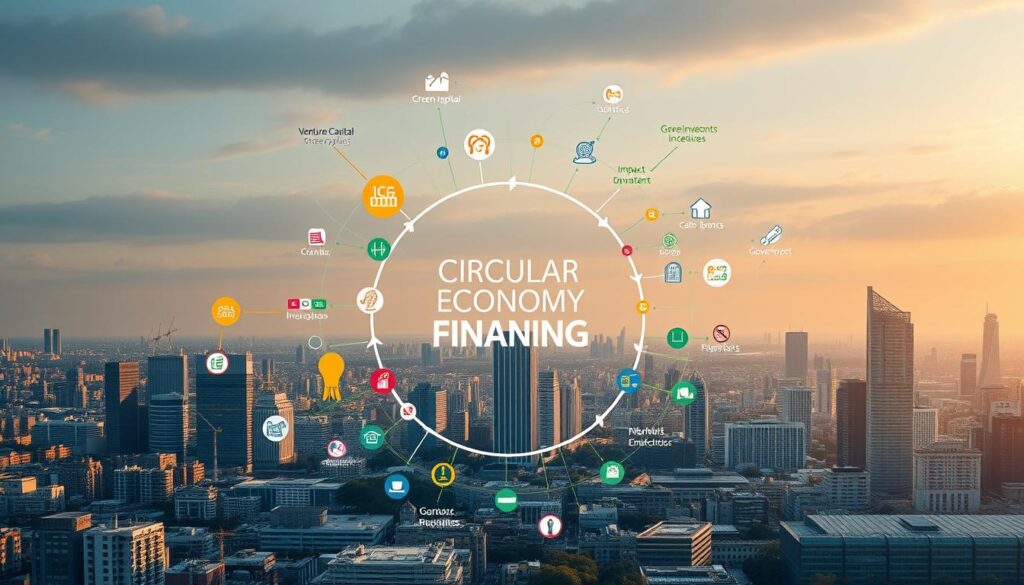
Financing the Circular Economy Transition
Financing the shift to a circular economy is crucial for sustainable development. As businesses and governments transition from linear to circular models, innovative financial solutions are becoming increasingly important.
Investment Models and Green Bonds
Green bonds have emerged as a significant financing tool for circular economy projects. These bonds are specifically used to fund environmentally friendly initiatives, such as sustainable infrastructure and renewable energy projects.
Public-Private Partnerships
Public-private partnerships (PPPs) play a vital role in financing circular economy transitions. By collaborating with both public and private sectors, businesses can access a broader range of funding opportunities and expertise.
Measuring ROI in Circular Initiatives
Measuring the return on investment (ROI) in circular initiatives requires new metrics that account for both financial and environmental benefits.
New Metrics for Circular Performance
New metrics are being developed to assess circular performance, including measures of resource efficiency and waste reduction.
Long-term Value Creation Assessment
Long-term value creation is a key aspect of circular economy investments. Assessing this value involves evaluating both the financial returns and the environmental impact over time.
| Investment Type | Description | Benefits |
|---|---|---|
| Green Bonds | Bonds issued to fund environmentally friendly projects | Specific funding for sustainable initiatives |
| Public-Private Partnerships | Collaborations between public and private sectors | Access to broader funding and expertise |
| Circular Economy Funds | Funds dedicated to circular economy projects | Targeted investment in circular initiatives |
Conclusion: The Future of Business in a Circular World
The circular economy represents a significant shift in how businesses operate, focusing on sustainable growth and reduced waste through innovative business models. By adopting circular economy business models, companies can minimize their environmental footprint while creating new revenue streams.
Waste reduction technology plays a crucial role in this transition, enabling businesses to optimize their operations and reduce waste. As companies continue to invest in these technologies, we can expect to see significant advancements in sustainable practices.
The future of business in a circular world is promising, with opportunities for growth, innovation, and collaboration. As more companies embrace circular economy principles, we move closer to a more sustainable and regenerative economy.